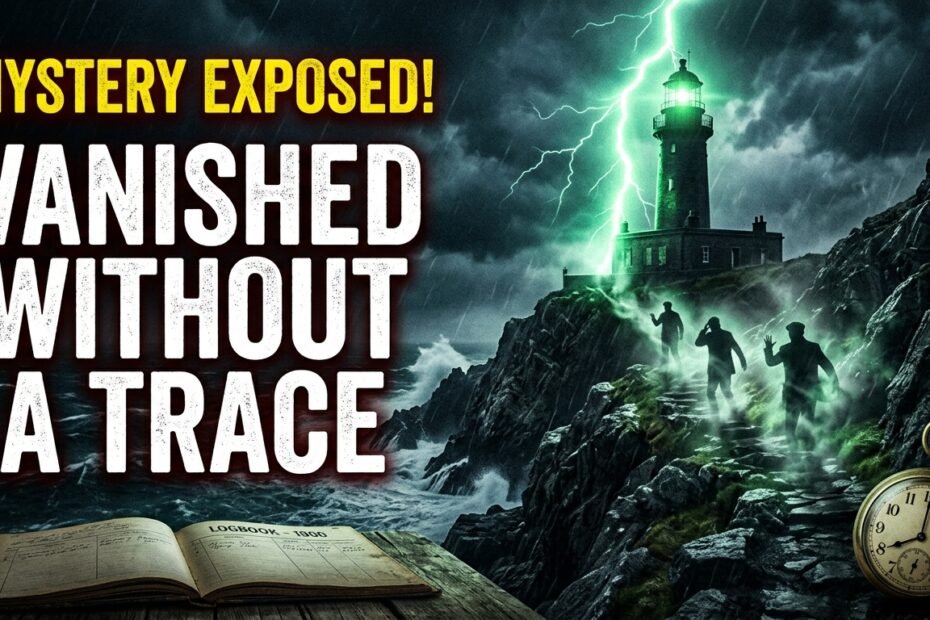
In the winter of December 1900, darkness fell over the Outer Hebrides off the rugged coast of Scotland. On the desolate, uninhabited rock of Eilean Mòr—the largest of the Flannan Isles—stood a brand-new, state-of-the-art lighthouse. Its powerful beam was supposed to guide sailors through treacherous Atlantic waters. But on the stormy night of December 15, the passing steamer *Archtor* noticed something chilling: the great light was dark.
Because of ferocious weather, a relief ship could not reach the island for days. Finally, on Boxing Day, December 26, the tender *Hesperus* cut through the choppy grey swell and dropped anchor.
Normally, the lighthouse keepers would raise the station flag and hurry to the jetty with a boat hook to welcome the relief crew. Today, the island was eerily still. No flag flew from the mast. No provisions boxes stood waiting. No one answered the ship’s horn or the rocket fired into the sky.
Relief keeper Joseph Moore rowed ashore and ascended the steep 160 steps carved into the cliff face. When he opened the unlocked heavy entrance door, a profound, tomb-like silence swallowed him.
Inside the living quarters, the kitchen fireplace was cold and black. The kitchen clock had run down and stopped ticking. On the table lay an uneaten meal and an overturned chair, as if someone had stood up in a violent hurry. Two of the three sets of heavy waterproof oilskin coats were missing from the pegs. The third set belonged to Donald McArthur, meaning he had rushed out into the brutal winter elements in his shirtsleeves.
The men—Principal Keeper James Ducat, Second Assistant Thomas Marshall, and Donald McArthur—had vanished without a trace.
Moore and the search party immediately checked the logbook. What they found deepened the dread. On December 12, Marshall had written of fierce, unnatural gales the likes of which he had never seen in twenty years. He noted that James Ducat was unusually quiet, and that the hardened veteran Donald McArthur had broken down in tears. Strangest of all, mainland weather logs recorded no storms in the region on those dates; the skies had been calm.
The final log entry, dated December 15, simply read: *”Storm ended, sea calm. God is over all.”*
A search of the island’s western landing revealed devastating signs of destruction. Iron railings were twisted out of shape, a massive iron crane had been ripped from its concrete footing, and a heavy storage box sitting 110 feet above sea level had been smashed to splinters.
The official inquiry concluded that an enormous rogue wave had swept up the cliff and dragged the three men into the freezing sea while they frantically secured gear. Yet questions remain. Why would seasoned keepers abandon their posts together in violation of strict Admiralty laws? Why did a veteran sailor weep over a storm that never struck the mainland?
Over a century later, the lighthouse stands automated and cold, keeping its lonely vigil—and safeguarding a secret the Atlantic will never surrender.
दिसंबर 1900 की बर्फीली सर्दियां थीं। स्कॉटलैंड के सुदूर पश्चिमी तट पर बसे फ्लेनन द्वीप समूह का सबसे बड़ा द्वीप ‘एलियन मोर’ (Eilean Mòr) अटलांटिक महासागर की उफनती लहरों के बीच अकेला खड़ा था। इस वीरान चट्टान पर हाल ही में बना एक आधुनिक लाइटहाउस समुद्री जहाजों को रास्ता दिखाने के लिए रात के अंधेरे में अपनी रोशनी बिखेरता था। लेकिन 15 दिसंबर की रात, वहां से गुजरने वाले एक मालवाहक जहाज ने देखा कि लाइटहाउस की बत्ती बुझी हुई है।
खराब मौसम की वजह से राहत जहाज कई दिनों तक द्वीप तक नहीं पहुंच सका। आखिरकार 26 दिसंबर को ‘हेस्पेरोस’ (Hesperus) नाम का जहाज द्वीप के करीब पहुंचा।
आम तौर पर जब भी कोई राहत जहाज आता था, तो लाइटहाउस के कीपर झंडा फहराकर और जेटी पर खड़े होकर उनका स्वागत करते थे। लेकिन इस बार पूरा द्वीप एक खौफनाक सन्नाटे में डूबा हुआ था। न तो कोई झंडा लहरा रहा था और न ही जहाज के सायरन का किसी ने जवाब दिया।
राहत कीपर जोसेफ मूर एक नाव के जरिए किनारे पहुंचे और चट्टानों को काटकर बनाई गई 160 सीढ़ियां चढ़कर ऊपर लाइटहाउस तक गए। जैसे ही उन्होंने दरवाजा खोला, अंदर की खामोशी चीख रही थी।
अंदर की चिमनी ठंडी और बुझी हुई थी। दीवार पर टंगी घड़ी रुक चुकी थी। मेज पर आधा-अधूरा खाना रखा हुआ था और पास ही एक कुर्सी गिरी पड़ी थी, मानो कोई अचानक हड़बड़ाहट में उठा हो। वाटरप्रूफ कोट टांगने वाली खूंटी पर केवल एक कोट लटक रहा था, जो डोनाल्ड मैकआर्थर का था। इसका मतलब था कि वह भयानक ठंड और तूफानी मौसम में बिना कोट पहने ही बाहर भाग गए थे।
तीनों अनुभवी कीपर—जेम्स डुकाट, थॉमस मार्शल और डोनाल्ड मैकआर्थर—रहस्यमयी तरीके से गायब थे।
जब खोजबीन दल ने लाइटहाउस की लॉगबुक देखी, तो उनके रोंगटे खड़े हो गए। 12 दिसंबर की एंट्री में थॉमस मार्शल ने लिखा था कि उन्होंने 20 साल के अपने करियर में ऐसा भयानक और अस्वाभाविक तूफान कभी नहीं देखा। उन्होंने यह भी दर्ज किया कि कठोर स्वभाव वाले मैकआर्थर डर से रो रहे थे। लेकिन सबसे हैरान करने वाली बात यह थी कि उस दिन मुख्य भूमि (Mainland) के मौसम विभाग के अनुसार पूरे इलाके में कोई तूफान था ही नहीं; समुद्र पूरी तरह शांत था।
लॉगबुक की आखिरी एंट्री 15 दिसंबर की दोपहर की थी, जिसमें लिखा था: *”तूफान थम गया है, समुद्र शांत है। ईश्वर सब पर है।”*
द्वीप के पश्चिमी किनारे पर भारी तबाही के निशान मिले। लोहे की मजबूत रेलिंग मुड़ी हुई थी, कंक्रीट में जड़ी भारी क्रेन उखड़ चुकी थी, और समुद्र तल से 110 फीट की ऊंचाई पर रखा लोहे का बक्सा चकनाचूर पड़ा था।
सरकारी जांच में निष्कर्ष निकाला गया कि शायद समुद्र से उठी कोई दैत्याकार लहर (Rogue Wave) तीनों को बहा ले गई। लेकिन यह सवाल आज भी अनसुलझा है कि नियमों के सख्त पाबंद तीन अनुभवी नाविक एक साथ लाइटहाउस को लावारिस छोड़कर बाहर क्यों गए? और उस तूफान से वे क्यों सहम गए थे, जो कभी आया ही नहीं था?
एक सदी से भी ज्यादा समय बीत चुका है, लेकिन फ्लेनन द्वीप का यह सन्नाटा आज भी उन तीन आत्माओं की दास्तान को अपने सीने में दफन किए हुए है।
December 1900 ka waqt tha. Scotland ke Outer Hebrides coast se door, Atlantic Ocean ke beech ek sunsaan aur pathrila island hai—Eilean Mòr. Is island par Flannan Isles Lighthouse khada tha, jiska kaam tha toofani samundar mein bhatakte ships ko rasta dikhana. Lekin 15 December ki raat ek passing cargo ship ne dekha ki lighthouse ki main light bilkul band thi.
Kharab mausam ke chalte rescue ship ko pahunchne mein kai din lag gaye. Aakhirkar 26 December ko jab ‘Hesperus’ naam ka ship island par pohcha, toh wahan ka manzar dekh kar sab dhang reh gaye.
Har baar jab bhi relief ship aati thi, toh lighthouse ke teeno keepers flag host karke dock par welcome karne aate the. Par us din poore island par ajeeb sa sannata chhaya hua tha. Na koi flag tha, na koi welcome, aur ship ke horn ka bhi kisi ne koi jawab nahi diya.
Relief keeper Joseph Moore akele boat se utre aur cliff par bani 160 seedhiyaan chadh kar upar lighthouse tak gaye. Gate khula tha, lekin andar ka mahol rooh kaanpa dene wala tha.
Kitchen ki fireplace bujhi hui aur thandi padi thi. Deewar par lagi ghadi ruk chuki thi. Dining table par adhoora khana chhoota hua tha aur ek chair zameen par ulti padi thi, jaise koi bohot buri tarah hadbada kar bhaga ho. Khunti par sirf ek waterproof oilskin coat latak raha tha, jo Donald McArthur ka tha—yaani wo itni katilana thand mein bina coat pehne hi bahar nikal gaya tha.
Teeno experienced keepers—James Ducat, Thomas Marshall aur Donald McArthur—hawa mein gayab ho chuke the.
Jab search team ne wahan ki logbook check ki, toh unke hosh ud gaye. 12 December ki entry mein Marshall ne likha tha ki unhone 20 saal mein itna khaufnak toofan kabhi nahi dekha. Unhone yeh bhi likha ki tough sailor Donald McArthur darr ke maare ro rahe the. Lekin sabse hairan karne wali baat yeh thi ki mainland ke weather records ke mutabiq un tareekhon par wahan koi toofan tha hi nahi; mausam bilkul shant tha.
Logbook ki aakhiri entry 15 December ki thi: *”Storm ended, sea calm. God is over all.”*
Island ke western landing area par bhari tabahi dekhne ko mili. Lohe ki railings buri tarah mudi hui thi, concrete se judi hui heavy crane ukhad chuki thi, aur sea level se 110 feet ki unchai par rakha box toot kar bikhra hua tha.
Official enquiry ne yeh maana ki shayad samundar se aayi kisi giant rogue wave ne teeno ko tab kheench liya jab wo supplies tie kar rahe the. Par sawal yeh banta hai ki hamesha rules follow karne wale teen veteran sailors ek saath lighthouse ko akela chhod kar bahar kyu gaye? Aur wo kis toofan se darr kar ro rahe the jo record hi nahi hua?
Aaj ek sadi se zyada beet chuki hai, par Eilean Mòr ka ye sunsaan lighthouse aaj bhi Atlantic ki lehron ke beech apne andar ek gehra raaz chupaye khada hai.