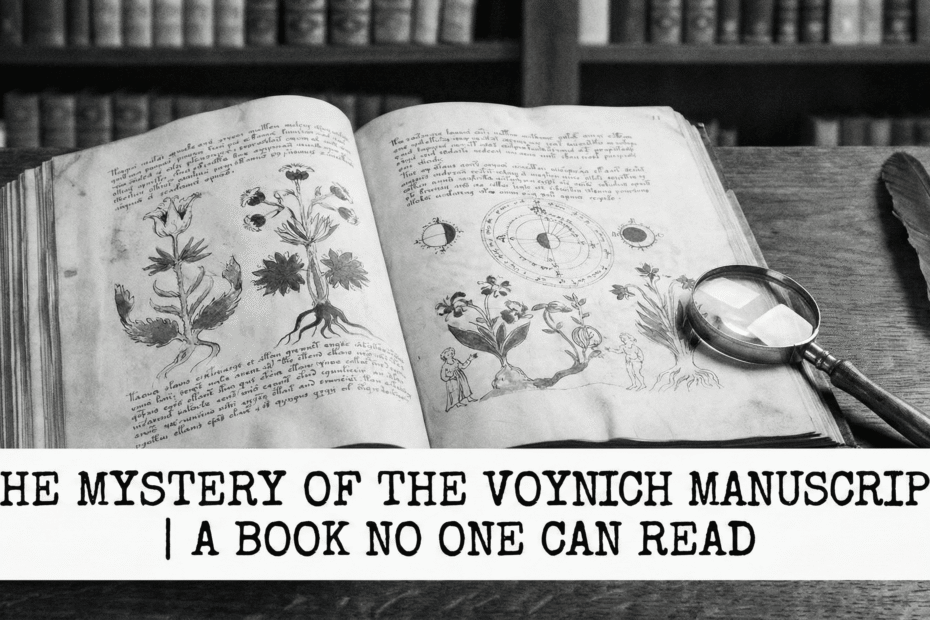
Title: The Mystery of the Voynich Manuscript
Content:
A 600-year-old book written in an undecipherable script, illustrated with bizarre plants that do not exist on Earth, cosmic diagrams, and mysterious bathing rituals. For centuries, the world’s greatest cryptographers, linguists, and supercomputers have tried to read it—and every single one has failed.
In the climate-controlled vaults of Yale University’s Beinecke Rare Book and Manuscript Library rests an enigmatic artifact known as MS 408. To historians and codebreakers worldwide, it is simply called the Voynich Manuscript. Spanning around 240 parchment pages, this medieval codex is widely considered the world’s most mysterious book: a beautifully bound, painstakingly illustrated volume that not a single human alive can read.
The Rediscovery of a Lost Riddle
The manuscript came into modern awareness in 1912 when Polish-American antique book dealer Wilfrid Voynich purchased a collection of rare books from the Jesuit College at Villa Mondragone near Rome, Italy. Among centuries-old religious texts, Voynich stumbled upon a peculiar manuscript filled with strange drawings and an unknown alphabet.
Accompanying the book was a 1666 letter from Johannes Marcus Marci, an official at Prague University, addressed to the Jesuit scholar Athanasius Kircher. The letter claimed the manuscript had once been purchased for 600 gold ducats by Holy Roman Emperor Rudolf II, who believed it to be the work of the 13th-century Franciscan friar and philosopher Roger Bacon.
For decades, skeptics wondered if the entire codex might be a modern forgery fabricated by Voynich himself. However, in 2009, researchers at the University of Arizona conducted rigorous carbon-14 dating on several pages. The results were conclusive: the animal vellum was produced between 1404 and 1438 AD, confirming that the manuscript is an authentic artifact from the early Italian Renaissance.
An Illustrated Journey into the Unknown
The Voynich Manuscript is not merely pages of undeciphered text; it is an extensively illustrated encyclopedia divided into several distinct thematic sections:
– The Botanical Section: Over a hundred detailed watercolor drawings of plants, roots, leaves, and flowers. Strangely, botanists have been unable to match almost any of these drawings to known plant species on Earth. Many appear to be bizarre hybrids—leaves of one plant attached to roots of another, crowned by fantasy blossoms.
– The Astronomical & Astrological Section: Intricate circular charts, celestial spheres, suns, moons, and zodiac-like star maps. While some zodiac constellations like Taurus and Scorpio are identifiable, others feature anomalous symbols and unconventional planetary arrangements.
– The Biological (Balneological) Section: One of the most bewildering sections depicts miniature nude women bathing in interconnected networks of tubes, green-tinted fluid pools, and organ-like plumbing systems. Scholars debate whether these drawings represent medieval gynecology, alchemical purification, or allegories of the human soul.
– The Cosmological & Pharmaceutical Section: Massive fold-out diagrams—including a nine-panel map known as the “Rosettes”—depicting circular castles, causeways, and architectural designs. This is followed by drawings of over a hundred medicinal herbs alongside apothecary jars and vials.
– The Recipe Section: Hundreds of short text paragraphs, each punctuated with a small star or floral bullet in the margin, resembling a medieval physician’s compendium of prescriptions or alchemical formulas.
A Language Unlike Any Other
The text itself, nicknamed “Voynichese,” is written from left to right in a fluid, confident hand. There are no corrections, crossed-out errors, or hesitations anywhere across its 240 pages, suggesting whoever wrote it was thoroughly fluent in the script.
What baffles linguists is the nature of this writing:
– The script uses an alphabet of roughly 20 to 25 distinct characters.
– Statistical analyses reveal that word frequencies follow Zipf’s Law—a mathematical pattern present in all natural human languages.
– Words exhibit recognizable linguistic structures, including consistent prefixes, suffixes, and syllables.
– Yet, the text matches no known linguistic family—it is not Latin, Greek, Hebrew, Arabic, Old European dialects, or East Asian scripts.
The Greatest Minds Defeated
During World War II, elite military cryptographers who successfully broke complex wartime ciphers—including William Friedman, the legendary American cryptanalyst who decrypted the Japanese “PURPLE” cipher—took on the Voynich Manuscript. Friedman spent years analyzing the text and ultimately admitted defeat, concluding that it was either an constructed artificial language or an unbreakable cipher.
In recent decades, computational linguists have deployed supercomputers and advanced artificial intelligence algorithms to detect hidden linguistic patterns. While algorithms have suggested vague statistical similarities to Hebrew, Turkish, or Nahuatl, none have produced a single coherent, verifiable translation.
The Competing Theories
With definitive answers still out of reach, researchers have proposed four primary hypotheses:
1. An Encrypted Alchemical or Medical Manual: In an era when groundbreaking scientific and medical discoveries could be labeled heresy by the Church, a medieval physician or alchemist may have designed a custom cipher to preserve proprietary research and protect themselves from persecution.
2. A Lost Natural Language: The text might represent an extinct spoken dialect from an isolated community in the Caucasus, Central Europe, or the Mediterranean, recorded in an invented phonetic script by a solitary scribe.
3. An Elaborate Medieval Hoax: Some argue an enterprising 15th-century alchemist manufactured the book with meaningless gibberish to sell to wealthy collectors like Emperor Rudolf II. However, creating a fabricated language in the 1400s that organically mirrors modern statistical laws of entropy and vocabulary distribution would have required an almost impossible level of mathematical sophistication.
4. Esoteric and Visionary Writings: Others speculate that the author was a mystic, apothecary, or visionary documenting spiritual journeys, altered states of consciousness, or symbolic dreamscapes.
An Enduring Literary Enigma
Today, the Voynich Manuscript remains carefully preserved at Yale University, with high-resolution digital scans accessible to anyone with an internet connection. Yet despite modern cryptography, neural networks, and global academic collaboration, the 600-year-old codex refuses to yield its secrets.
Until a breakthrough occurs, the Voynich Manuscript stands as a powerful reminder of history’s untamed mysteries—a silent Renaissance voice that continues to whisper across six centuries in a language only its author could understand.
Title: वोयनिच पांडुलिपि का अनसुलझा रहस्य (The Mystery of the Voynich Manuscript)
Content:
करीब 600 साल पुरानी एक ऐसी किताब, जिसे एक अनजान लिपि में लिखा गया है, जिसमें ऐसी वनस्पतियों के चित्र बने हैं जो धरती पर पाई ही नहीं जातीं, और जिसमें रहस्यमयी खगोलीय व स्नान के आरेखों की भरमार है। सदियों से दुनिया के सबसे बेहतरीन कोड-ब्रेकर, भाषाविद् और सुपरकंप्यूटर इसे पढ़ने की कोशिश कर रहे हैं—लेकिन आज तक कोई भी इसे डिकोड नहीं कर सका।
येल यूनिवर्सिटी की प्रसिद्ध बेइनेके रेयर बुक एंड मैनुस्क्रिप्ट लाइब्रेरी के सुरक्षित वॉल्ट में एक रहस्यमयी पांडुलिपि रखी है, जिसे आधिकारिक तौर पर ‘MS 408’ और दुनिया भर में ‘वोयनिच मैनुस्क्रिप्ट’ (Voynich Manuscript) के नाम से जाना जाता है। लगभग 240 पन्नों की चर्मपत्र (पर्चमेंट) पर लिखी यह मध्यकालीन किताब दुनिया की सबसे रहस्यमयी किताब मानी जाती है: एक ऐसी खूबसूरत और विस्तृत कृति जिसे आज तक कोई भी इंसान पढ़ नहीं सका है।
एक खोए हुए रहस्य की दोबारा खोज
इस पांडुलिपि का आधुनिक इतिहास 1912 में शुरू हुआ, जब पोलिश-अमेरिकी दुर्लभ किताबों के व्यापारी विल्फ्रेड वोयनिच (Wilfrid Voynich) ने इटली के रोम के पास विला मोंड्रेगोन में जेसुइट कॉलेज से पुरानी किताबों का एक संग्रह खरीदा। सैकड़ों साल पुराने धार्मिक ग्रंथों के बीच वोयनिच को यह अजीबोगरीब किताब मिली, जो अज्ञात लिपि और विचित्र रेखाचित्रों से भरी थी।
किताब के साथ 1666 का एक पुराना पत्र भी संलग्न था, जिसे प्राग विश्वविद्यालय के विद्वान जोहान्स मार्कस मार्की ने जेसुइट विद्वान अथानासियस किर्चर को लिखा था। इस पत्र के अनुसार, पवित्र रोमन सम्राट रुडोल्फ द्वितीय ने इस पांडुलिपि को 600 स्वर्ण मुद्राओं (डुकैट्स) में खरीदा था, क्योंकि उन्हें विश्वास था कि यह 13वीं सदी के महान दार्शनिक और वैज्ञानिक रोजर बेकन की रचना है।
शुरुआत में कई संशयवादियों को लगा कि यह विल्फ्रेड वोयनिच द्वारा तैयार किया गया कोई आधुनिक फर्जीवाड़ा हो सकता है। लेकिन 2009 में एरिजोना विश्वविद्यालय में किए गए कार्बन-14 डेटिंग परीक्षणों ने साबित कर दिया कि इसके पन्ने 1404 से 1438 ईस्वी के बीच के हैं। यानी यह पांडुलिपि निसंदेह 15वीं सदी के शुरुआती पुनर्जागरण काल की एक वास्तविक ऐतिहासिक धरोहर है।
अज्ञात दुनिया का सचित्र दस्तावेज़
वोयनिच पांडुलिपि केवल अज्ञात अक्षरों का संकलन नहीं है, बल्कि यह विस्तृत रेखाचित्रों से सजी एक संपूर्ण सचित्र ज्ञानकोश जैसी लगती है। इसे मुख्य रूप से कई खंडों में बांटा गया है:
– वनस्पति खंड (Botanical Section): इसमें सौ से अधिक पौधों, उनकी जड़ों, तनों और फूलों के विस्तृत रंगीन चित्र बने हैं। हैरानी की बात यह है कि दुनिया भर के वनस्पतिशास्त्री इनमें से लगभग किसी भी पौधे की पहचान पृथ्वी पर मौजूद असली प्रजातियों से नहीं कर पाए हैं। कई चित्र विचित्र संकर जैसे लगते हैं—जहाँ एक पौधे की जड़ें, दूसरे के पत्ते और तीसरे के काल्पनिक फूल जुड़े हुए हैं।
– खगोल और ज्योतिष खंड (Astronomical Section): इसमें गोलाकार चार्ट, खगोलीय चक्र, सूर्य, चंद्रमा और राशियों के चित्र मौजूद हैं। वृषभ और वृश्चिक जैसी कुछ राशियाँ पहचानी जा सकती हैं, लेकिन कई अन्य प्रतीक पारंपरिक ज्योतिष से बिल्कुल मेल नहीं खाते।
– जैविक खंड (Biological Section): यह पांडुलिपि का सबसे विचित्र हिस्सा है। इसमें कई नग्न छोटी महिलाओं को आपस में जुड़ी नलियों, हरे रंग के तरल पदार्थों से भरे कुंडों और जैविक अंगों जैसी प्रणालियों में स्नान करते हुए दिखाया गया है। कुछ विद्वान इसे मध्यकालीन चिकित्सा, महिला स्वास्थ्य, या कीमिया (अल्केमी) की शुद्धि प्रक्रियाओं का रूपक मानते हैं।
– ब्रह्मांड और औषधि खंड (Cosmological & Pharmaceutical Section): इसमें बड़े-बड़े फोल्ड-आउट चार्ट हैं, जिसमें ‘रोसेट्स’ नामक एक विशाल नौ-खंडों वाला नक्शा शामिल है, जिस पर गोलाकार किले, मीनारें और रास्ते बने हैं। इसके बाद दर्जनों जड़ी-बूटियों और दवाइयों के मर्तबानों के चित्र हैं।
– नुस्खा खंड (Recipe Section): इसमें छोटे-छोटे पैराग्राफ हैं, जिनके हाशिए पर तारे या फूलों जैसे बिंदु बने हैं। यह देखने में किसी मध्यकालीन चिकित्सक के नुस्खों या कीमियाई सूत्रों की डायरी जैसी लगती है।
एक ऐसी भाषा जो दुनिया में कहीं नहीं बोली जाती
इस किताब की लिपि को शोधकर्ताओं ने ‘वोयनिचीज’ (Voynichese) नाम दिया है। इसे बाएं से दाएं अत्यंत धाराप्रवाह और सधे हुए हाथों से लिखा गया है। पूरे 240 पन्नों में कहीं भी कोई गलती काटने, सुधारने या हिचकिचाहट का निशान नहीं मिलता, जिससे संकेत मिलता है कि लेखक अपनी इस लिपि में पूरी तरह पारंगत था।
भाषाविदों को हैरान करने वाली मुख्य बातें:
– इस लिपि में लगभग 20 से 25 अलग-अलग अक्षर या संकेत हैं।
– सांख्यिकीय विश्लेषण से पता चला है कि इसके शब्दों की बनावट ‘ज़िफ के नियम’ (Zipf’s Law) का पालन करती है—यह एक गणितीय नियम है जो दुनिया की सभी प्राकृतिक मानव भाषाओं में पाया जाता है।
– शब्दों में उपसर्ग, प्रत्यय और व्याकरण जैसी सुसंगत संरचनाएं दिखाई देती हैं।
– इसके बावजूद, यह भाषा लैटिन, ग्रीक, हिब्रू, अरबी, संस्कृत या किसी भी ज्ञात प्राचीन यूरोपीय या एशियाई भाषा से मेल नहीं खाती।
दुनिया के सबसे बड़े कोड-ब्रेकर्स की हार
द्वितीय विश्व युद्ध के दौरान जापानी ‘पर्पल कोड’ को तोड़ने वाले दिग्गज अमेरिकी क्रिप्टोग्राफर विलियम फ्रीमैन ने अपनी टीम के साथ वोयनिच मैनुस्क्रिप्ट को डिकोड करने में वर्षों बिताए, लेकिन अंततः उन्होंने हार मान ली।
आधुनिक दौर में सुपरकंप्यूटरों और कृत्रिम बुद्धिमत्ता (AI) के उन्नत एल्गोरिदम भी इस लिपि को सुलझाने में लगाए गए। कुछ एल्गोरिदम ने हिब्रू या तुर्की भाषा से सांख्यिकीय समानता के संकेत दिए, लेकिन कोई भी तकनीक इसका एक भी सुसंगत और प्रमाणित वाक्य अनुवादित नहीं कर सकी।
प्रचलित सिद्धांत और मान्यताएं
जब तक इसका ठोस अनुवाद नहीं हो जाता, तब तक शोधकर्ताओं के बीच चार प्रमुख सिद्धांत चर्चा में रहते हैं:
1. गुप्त औषधीय या कीमियाई ग्रंथ: उस दौर में जब चर्च नए वैज्ञानिक शोधों को धर्मविरोधी मानकर दंडित करता था, संभवतः किसी चिकित्सक या कीमियागर ने अपने गुप्त शोध और नुस्खों को बचाने के लिए यह निजी कोड भाषा बनाई थी।
2. एक लुप्त प्राकृतिक भाषा: यह किसी सुदूर और अलग-थलग क्षेत्र की कोई भूली-बिसरी बोली हो सकती है, जिसे किसी विद्वान ने अपनी बनाई हुई लिपि में दर्ज किया और समय के साथ वह बोली पूरी तरह विलुप्त हो गई।
3. मध्यकालीन फर्जीवाड़ा (Hoax): कुछ का मानना है कि 15वीं सदी के किसी चतुर कीमियागर ने राजा-महाराजाओं से धन ऐंठने के लिए यह नकली किताब गढ़ी थी। लेकिन 1400 के दशक में आधुनिक भाषाई नियमों और सांख्यिकीय सटीकता के साथ ऐसा फर्जीवाड़ा तैयार करना लगभग असंभव प्रतीत होता है।
4. आध्यात्मिक या अलौकिक दृष्टि: एक अन्य विचार यह है कि यह किसी रहस्यदर्शी या तपस्वी के अंतर्मन की कल्पनाएं और ध्यान में देखे गए स्वप्नलोक का संकलन है।
एक अमर ऐतिहासिक पहेली
आज वोयनिच मैनुस्क्रिप्ट येल यूनिवर्सिटी में पूरी तरह सुरक्षित है और इसके हाई-रिज़ॉल्यूशन डिजिटल स्कैन इंटरनेट पर हर किसी के अध्ययन के लिए उपलब्ध हैं। आधुनिक विज्ञान, न्यूरल नेटवर्क और दुनिया भर के विशेषज्ञों की कोशिशों के बावजूद, 600 साल पुरानी यह किताब अपने रहस्य को सीने से लगाए बैठी है।
जब तक इसकी एक भी पंक्ति का प्रामाणिक अर्थ नहीं निकलता, तब तक वोयनिच पांडुलिपि इतिहास की सबसे बड़ी साहित्यिक पहेली बनी रहेगी—एक ऐसा मौन संदेश जो छह सदियों से इंसान की असीमित जिज्ञासा को चुनौती दे रहा है।
Title: The Mystery of the Voynich Manuscript
Content:
600 saal purani ek aisi kitaab jo aisi anjaan lipi mein likhi gayi hai jise aaj tak koi insaan padh nahi paaya. Iske panno par aise ajeeb ped-paudhon ke illustrations hain jo poori duniya mein kahin exist hi nahi karte, sath hi ajeeb celestial charts aur liquid-filled tubs mein nahati hui aakritiyan hain. Centuries beet chuki hain, World War ke top codebreakers, linguists aur yahan tak ki aaj ke modern AI algorithms bhi fail ho chuke hain, par is kitaab ka raaz aaj bhi anboojh bana hua hai.
Yale University ki Beinecke Rare Book and Manuscript Library ke secure vaults mein rakhi is mysterious book ko officially “MS 408” aur duniya bhar mein “Voynich Manuscript” ke naam se jaana jata hai. Lagbhag 240 parchment pages wali ye medieval book history ki sabse badi puzzle maani jaati hai: ek aisi beautifully illustrated kitaab jiska ek single word bhi decode nahi ho saka hai.
Kahan Aur Kaise Mili Ye Mysterious Kitaab?
Is manuscript ki modern story 1912 mein shuru hoti hai, jab Wilfrid Voynich naam ke ek Polish-American antique book dealer ne Rome ke paas Villa Mondragone ke Jesuit College se purani kitabon ka ek rare collection kharida. Dheron sadiyon purani religious kitabon ke beech unhe ye ajeeb manuscript mili, jo anjaan alphabets aur weird drawings se bhari hui thi.
Is kitaab ke saath 1666 ka ek purana letter bhi mila tha, jise Prague University ke scholar Johannes Marcus Marci ne Jesuit scientist Athanasius Kircher ko likha tha. Letter ke mutabiq, Holy Roman Emperor Rudolf II ne is manuscript ko 600 gold ducats (jo us zamane mein bohot badi rakam thi) dekar kharida tha, kyunki unhe lagta tha ki ye 13th century ke mashhoor philosopher Roger Bacon ne likhi hai.
Shuruat mein kai logon ko laga ki shayad ye Wilfrid Voynich ka banaya koi modern fake forgery hai. Lekin 2009 mein University of Arizona ne iske pages par Carbon-14 dating perform ki. Results ne sabko dang kar diya: manuscript ka vellum 1404 se 1438 AD ke beech ka nikla. Matlab ye bilkul authentic 15th century early Renaissance period ki real historical kitaab hai.
Ek Anjaan Duniya Ka Sachitra Encyclopedia
Voynich Manuscript sirf unexplained text ka dher nahi hai, balki ye ek detailed illustrated encyclopedia jaisi dikhti hai, jise alag-alag sections mein divide kiya gaya hai:
– Botanical Section: Isme 100 se zyada detailed watercolor plant illustrations hain. Sabse ajeeb baat ye hai ki world ke expert botanists bhi inme se kisi plant ko real-world species se match nahi kar paaye. Drawings aisi hain jaise kisi ek paudhe ki roots, doosre ke leaves aur teesre ke imaginary phoolon ko jodkar nayi species bana di gayi ho.
– Astronomical & Astrological Section: Circular celestial diagrams, concentric circles, sun, moon aur zodiac constellations ke detailed charts. Kuch zodiac signs jaise Taurus aur Scorpio pehchaane ja sakte hain, lekin baki symbols conventional astrology se bilkul alag hain.
– Biological (Balneological) Section: Ye book ka sabse weird aur baffling part hai. Isme miniature naked women ko interconnected pipes, green liquid se bhare tubs aur body-organ jaise structures mein nahate hue dikhaya gaya hai. Researchers ka maanna hai ki ye medieval gynecology, medicine, ya alchemy ke purification process ka symbolic representation ho sakta hai.
– Cosmological & Pharmaceutical Section: Isme massive fold-out maps hain—jaise “Rosettes” map, jisme circular castles, towers aur pathways bane hain. Iske baad dheron aisi drawings hain jahan medicinal herbs ke sath apothecary jars aur flasks dikhaye gaye hain.
– Recipe Section: Chhote-chhote paragraphs jinke margin mein flower ya star jaise bullets bane hain. Ye dekhne mein kisi medieval doctor ke prescriptions ya alchemical recipes ki diary lagti hai.
Wo Zubaan Jise Koi Padh Nahi Paata
Is manuscript ki text ko researchers ne “Voynichese” naam diya hai. Ye left-to-right kaafi smooth aur confident handwriting mein likhi gayi hai. Poori kitaab ke 240 pages mein kahin bhi koi cutting, error correction ya hesitation ke signs nahi hain, jisse lagta hai ki likhne wala is script par poori mastery rakhta tha.
Linguists ke liye sabse hairan karne wali baatein:
– Is script mein lagbhag 20 se 25 distinct alphabets ya symbols hain.
– Statistical analysis se pata chalta hai ki iske words “Zipf’s Law” follow karte hain—jo ki duniya ki har natural human language ka universal mathematical pattern hai.
– Words mein natural prefixes, suffixes aur grammatical patterns saaf dikhte hain. Matlab ye koi random scribbles ya bewakoofi nahi hai.
– Lekin paradox ye hai ki ye text Latin, Greek, Hebrew, Arabic, Sanskrit ya kisi bhi known European aur Asian language family se match nahi karta.
Duniya Ke Top Codebreakers Bhi Haare
Second World War ke dauran Japanese “PURPLE” cipher ko crack karne wale legendary American cryptographer William Friedman ne apni team ke sath is kitaab ko decode karne mein saalon bita diye. Lekin aakhirkar unhe bhi haar maan kar accept karna pada ki ye unke career ka sabse complex puzzle hai.
Modern era mein powerful supercomputers aur AI neural networks ko is script ke patterns samajhne ke liye train kiya gaya. Algorithms ne Hebrew ya Turkish se kuch vague statistical similarities suggest ki, lekin aaj tak koi bhi machine ya linguist iska ek single sentence bhi reliably translate nahi kar saka.
Major Theories Aur Hypotheses
Jab tak text decode nahi hota, researchers ke paas 4 main hypotheses hain:
1. Encrypted Medical / Alchemical Guide: Medieval period mein Church nayi scientific discoveries aur medicine ko heresy maan kar saza deti thi. Ho sakta hai kisi doctor ya alchemist ne apni secret research aur formulas ko Inquisition se bachane ke liye ye custom cipher banaya ho.
2. Lost Regional Language: Ye kisi remote isolated community ki aisi bolchaal ki language ho sakti hai jise author ne khud ki banayi script mein document kiya, aur waqt ke sath wo poori dialect bina kisi doosre record ke extinct ho gayi.
3. Masterpiece Medieval Hoax: Ek theory ye bhi hai ki 15th century ke kisi shaatir alchemist ne ameer rajaon ko thagne ke liye ye fake manuscript taiyaar ki. Par 1400s mein aisi fabricated book banana jo modern linguistic entropy laws ko mathematically match kare, lagbhag namumkin lagta hai.
4. Esoteric / Mystical Visions: Kuch scholars ka manna hai ki ye kisi mystic ya visionary ke personal spiritual visions, altered states of consciousness aur dreamscapes ka private record hai.
History Ki Sabse Badi Unsolved Puzzle
Aaj Voynich Manuscript Yale University mein safely preserved hai aur iske high-resolution digital scans worldwide publically available hain. Lekin 21st century ki modern computing, cryptography aur artificial intelligence ke bawajood, ye 600 saal purani kitaab apne raaz kholne ko tayyar nahi hai.
Jab tak iska ek clear translation nahi nikalta, tab tak Voynich Manuscript human history ka sabse fascinating unreadable treasure bana rahega—ek aisi aawaz jo chheh sadiyon se ghoonj rahi hai, par jise samajhne wala aaj tak koi paida nahi hua.