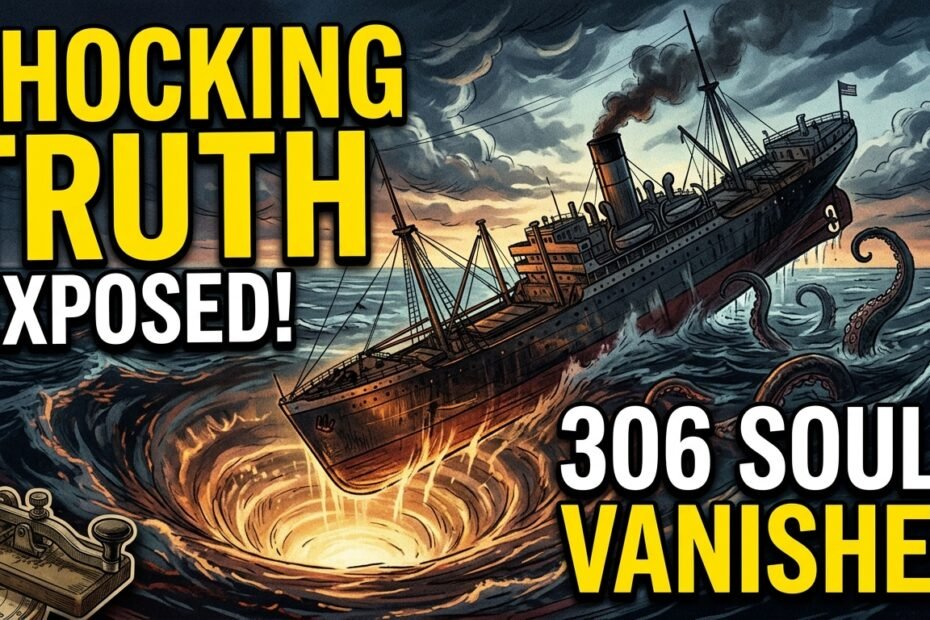
The Phantom Voyage: The Vanishing of USS Cyclops
In March 1918, amid the raging storms of World War I, the United States Navy suffered the single largest non-combat loss of life in its history. A massive 542-foot steel collier named the USS Cyclops vanished into thin air, leaving behind no wreckage, no distress calls, and 306 souls lost to the abyss.
Commissioned to supply coal and raw materials to the Allied war fleet, the Cyclops departed Rio de Janeiro on February 16, 1918. Her cavernous holds were packed to maximum capacity with over 10,800 tons of dense manganese ore—a vital mineral used in munitions manufacturing. Heavy and unforgiving, this cargo pushed the vessel dangerously low into the waterline. To make matters worse, one of her two steam engines was disabled by a fractured cylinder, forcing the colossus to limp across the Atlantic on half-power.
Commanding the vessel was Lieutenant Commander George W. Worley, an eccentric, German-born merchant captain known for erratic mood swings, harsh disciplinary antics, and walking the deck in his underwear. Friction between Worley and his crew had reached a boiling point during the voyage. On March 3, the Cyclops made an unexpected, unscheduled detour into the port of Barbados to take on coal and provisions, baffling naval officials who believed she already had sufficient supplies.
On the morning of March 4, 1918, the USS Cyclops weighed anchor and steamed into the turquoise waters towards Baltimore, Maryland. She was expected to arrive on March 13.
She was never seen again.
Equipped with a powerful state-of-the-art wireless transmitter capable of broadcasting distress signals across hundreds of miles, the Cyclops sent out absolute silence. No SOS was ever logged. When the ship failed to dock in Baltimore, the Navy launched an unprecedented search operation, scouring thousands of square miles of the Caribbean and Atlantic waters. Dozens of vessels combed the ocean for weeks, but not a single piece of flotsam, life raft, oil slick, or body was ever discovered. It was as if the 19,000-ton leviathan had simply ceased to exist in the watery expanse later christened the Bermuda Triangle.
Over the decades, investigators have proposed countless explanations. Did an Imperial German U-boat torpedo the vessel? German records inspected after the armistice contained no mention of an attack. Was there a violent mutiny led by pro-German sympathizers or provoked by Captain Worley’s tyrannical behavior? Or did a sudden squall overwhelm the crippled collier, causing the dense manganese ore to shift and roll the vessel over in seconds, dragging everyone into the deep before a radio operator could tap out a single dot or dash?
More than a century later, the ocean refuses to yield its secret. As President Woodrow Wilson somberly noted in the wake of the tragedy: “Only God and the sea know what happened to the great ship.”
यूएसएस साइक्लोप्स का अनसुलझा रहस्य: समंदर में समाया एक दैत्याकार जहाज
मार्च 1918 का समय था। प्रथम विश्व युद्ध अपनी चरम सीमा पर था, तभी अमेरिकी नौसेना के इतिहास की सबसे रहस्यमयी और बिना किसी युद्ध के सबसे बड़ी मानव क्षति की घटना घटी। 542 फीट लंबा और 19,000 टन वजनी भीमकाय नौसैनिक जहाज ‘यूएसएस साइक्लोप्स’ (USS Cyclops) समंदर के सीने से रहस्यमय तरीके से गायब हो गया। उस पर सवार 306 लोग और पूरा जहाज बिना कोई सुराग छोड़े हमेशा के लिए लापता हो गए।
साइक्लोप्स 16 फरवरी 1918 को रियो डी जेनेरो (ब्राजील) से अमेरिका के बाल्टीमोर के लिए रवाना हुआ था। जहाज के निचले हिस्सों में 10,800 टन से अधिक मैंगनीज अयस्क भरा हुआ था—जो युद्ध सामग्री बनाने के लिए बेहद जरूरी और भारी खनिज था। इस अत्यधिक वजन के कारण जहाज पानी में बहुत नीचे धंसकर चल रहा था। इसके अलावा, एक इंजन का सिलेंडर फट जाने की वजह से यह विशाल जहाज अपनी आधी क्षमता पर धीरे-धीरे आगे बढ़ रहा था।
जहाज की कमान लेफ्टिनेंट कमांडर जॉर्ज डब्ल्यू. वर्ली के हाथों में थी, जो अपने अजीबोगरीब मिजाज और सख्त रवैये के लिए कुख्यात थे। 3 मार्च को जहाज अप्रत्याशित रूप से बारबाडोस के बंदरगाह पर रुका। पर्याप्त राशन होने के बावजूद वहां अतिरिक्त कोयला और रसद ली गई। 4 मार्च की सुबह, साइक्लोप्स ने बारबाडोस से लंगर उठाया और बाल्टीमोर की ओर बढ़ चला। 13 मार्च तक उसे अपने गंतव्य पर पहुंचना था।
लेकिन वह दिन कभी नहीं आया।
साइक्लोप्स पर तत्कालीन दौर का सबसे आधुनिक वायरलेस रेडियो सिस्टम मौजूद था, जिससे सैकड़ों मील दूर तक आपातकालीन संदेश भेजा जा सकता था। मगर कोई SOS संदेश नहीं आया। जब जहाज निर्धारित समय पर नहीं पहुंचा, तो अमेरिकी नौसेना ने इतिहास का सबसे बड़ा तलाशी अभियान शुरू किया। दर्जनों युद्धपोतों और विमानों ने हफ्तों तक कैरेबियन सागर की खाक छानी, लेकिन समंदर में न तो कोई मलबा मिला, न कोई लाइफबोट, न तेल का रिसाव और न ही किसी इंसान का शव। जहाज उसी इलाके में गायब हुआ था जिसे आज ‘बरमूडा ट्रायंगल’ कहा जाता है।
इस रहस्य को लेकर कई सिद्धांत सामने आए। क्या किसी जर्मन पनडुब्बी (U-boat) ने उसे डुबो दिया? युद्ध के बाद जर्मन नौसेना के रिकॉर्ड्स में ऐसी किसी घटना का कोई जिक्र नहीं मिला। क्या कप्तान के सनकी व्यवहार से तंग आकर चालक दल ने बगावत कर दी थी? या फिर अचानक उठे किसी चक्रवाती तूफान ने लड़खड़ाते जहाज को पलट दिया और भारी मैंगनीज अयस्क के कारण जहाज चंद सेकंडों में पाताल में समा गया?
एक सदी से भी अधिक समय बीत जाने के बाद भी अटलांटिक महासागर ने इस रहस्य पर चुप्पी साध रखी है। तत्कालीन अमेरिकी राष्ट्रपति वुडरो विल्सन ने इस घटना पर कहा था: “उस महान जहाज के साथ क्या हुआ, यह केवल ईश्वर और समंदर ही जानते हैं।”
USS Cyclops: Samandar Ke Andar Ghayab Hua 19,000 Ton Ka Jahaaz
Year 1918, World War 1 ka daur tha. US Navy ke pas har tarah ke takatwar jahaaz the, lekin isi dauran unke sath ek aisi ghatna ghati jisne military history ko hila kar rakh diya. 542 feet lamba aur 19,000 ton wazani ek giant cargo ship—USS Cyclops—bina kisi warning, bina kisi SOS signal ke samandar me aise gayab ho gaya jaise uska kabhi koi wajood hi na raha ho. Jahaaz par sawaar sabhi 306 log hamesha ke liye laapata ho gaye.
16 February 1918 ko Cyclops ne Rio de Janeiro se Baltimore ke liye apni yatra shuru ki thi. Jahaaz par 10,800 tons se zyada manganese ore lada hua tha—ek aisi heavy metal jo weapons aur munitions banane ke kaam aati thi. Is bhaari-bharkam wazan ki wajah se jahaaz paani me kafi gehra duba hua chal raha tha. Upar se uska ek engine pehle se kharab tha, jiski wajah se wo aadhi speed par aage badh raha tha.
Ship ke captain the Lieutenant Commander George W. Worley, jo apne ajeebo-gareeb aur sanki behavior ke liye mashhoor the. 3 March ko jahaaz achanak Barbados ke port par ruka. Wahan unhone bina kisi clear explanation ke extra supplies aur coal load kiya. Agle hi din, yaani 4 March 1918 ki subah, Cyclops ne Barbados chhora aur North Atlantic ke raste Baltimore ki taraf chal pada.
Lekin uske baad USS Cyclops ko kisi ne dobara kabhi nahi dekha.
Hairani ki baat ye thi ki Cyclops ke paas us waqt ka sabse powerful wireless radio system tha, jisse emergency me SOS bheja ja sakta tha. Magar crew ki taraf se koi ek single distress call tak nahi aayi. Jab ship 13 March ko Baltimore nahi pahuncha, to US Navy ne samandar me sabse bada search operation chalaya. Kai hafton tak hazaron square miles ka area chhana gaya, par na to koi wreckage mila, na koi lifeboat, na oil slick, aur na hi koi dead body. Jahaaz bilkul usi ilaqe me gayab hua tha jise aaj Bermuda Triangle kaha jata hai.
Is mysterious disappearance par kai theories aayi. Kuch logon ka manna tha ki kisi German submarine ne ship ko target kiya, par German war archives me aisi kisi strike ka koi record nahi mila. Dusri theory ye thi ki bhari wazan aur kharab engine ke chalte achanak aayi kisi monster wave ne ship ko secondon me ulat diya, aur bhari manganese ore ke sath ship sidha ocean bed me samah gaya—itni tezi se ki radio operator ko help mangne ka mauka tak nahi mila.
Ek sadi se zyada beet chuka hai, par USS Cyclops ka raaz aaj bhi samandar ki gehraiyon me dafan hai. Us waqt ke President Woodrow Wilson ne theek hi kaha tha: “Us vishal jahaaz ke sath kya hua, ye sirf Khuda aur samandar hi jaante hain.”