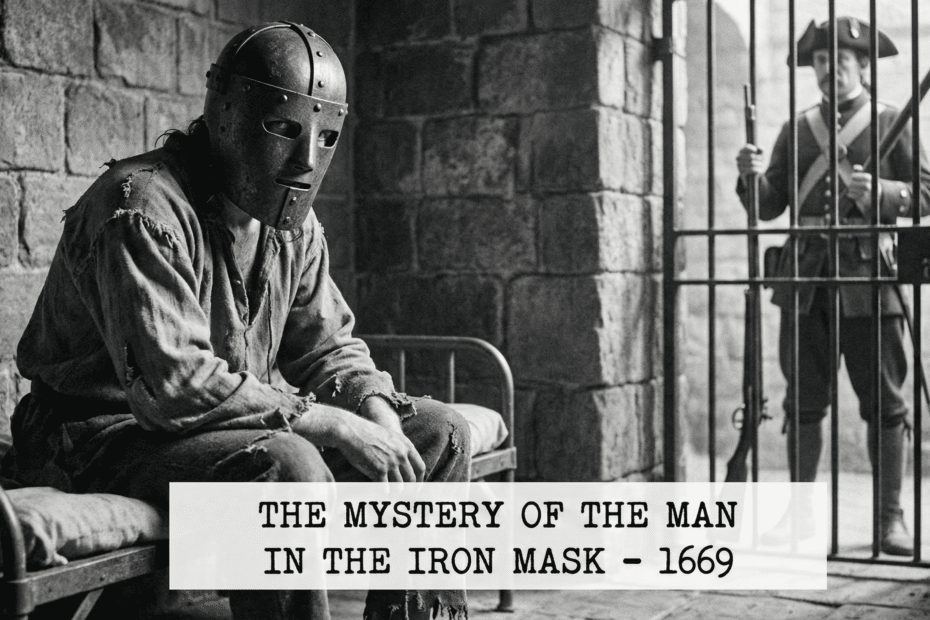
Title: The Mystery of the Man in the Iron Mask
Content:
A nameless prisoner locked away in the darkest fortresses of 17th-century France. A face hidden beneath an impenetrable mask for over three decades. And a royal secret so dangerous that even after his death, every trace of his existence was systematically destroyed.
Throughout history, countless prisoners have become famous for their crimes, their daring escapes, or their tragic trials. But in late 17th-century France, during the reign of King Louis XIV—the powerful “Sun King”—there lived a prisoner whose identity was treated as a matter of supreme state security. He was never allowed to speak his real name, his face was never seen by human eyes for thirty-four years, and any attempt to reveal his true identity carried an immediate death sentence. Known to history and legend as the “Man in the Iron Mask,” his enigmatic life remains one of the most intriguing historical mysteries of all time.
The Arrival of the Shadowed Captive
The earliest official records of this mysterious prisoner date back to 1669, when a royal minister of King Louis XIV, the Marquis de Louvois, sent a confidential letter to Bénigne Dauvergne de Saint-Mars, the governor of the remote fortress prison of Pignerol in the French Alps.
Louvois informed Saint-Mars that a prisoner named “Eustache Dauger” would soon arrive under absolute secrecy. The instructions were unusually strict: Saint-Mars was ordered to prepare a secure cell with double doors to prevent anyone from overhearing conversations. Saint-Mars was instructed to visit the prisoner personally only once a day to deliver food, water, and whatever he needed. If the captive ever spoke of anything other than his basic physical needs, Saint-Mars had explicit royal authority to run him through with a sword on the spot.
Velvet or Iron: The Legend of the Mask
Popular folklore, immortalized by philosopher Voltaire and novelist Alexandre Dumas, claims the prisoner was forced to wear a brutal helmet of solid iron locked with padlocks. However, authentic historical records and prison logs tell a slightly different story. The mask was most likely made of black velvet, reinforced with whalebone and fastened with steel clasps.
Regardless of whether the mask was crafted from velvet or iron, its purpose was absolute and uncompromising: total concealment of the prisoner’s facial features. For over three decades, whether eating, sleeping, or being transferred across France, the prisoner was never seen without his face covered.
Royal Treatment Behind Iron Bars
What baffled contemporaries and modern historians alike was the extraordinary contradiction in the prisoner’s conditions. Unlike typical 17th-century inmates who were subjected to torture, cold dungeons, and starvation, this man was treated with immense deference and dignity.
He was provided with fine linen clothing, high-quality meals, books, and even a lute to play music. Whenever Saint-Mars or senior guards entered his presence, they reportedly addressed him with great politeness and remained standing until permitted to sit. This was not the treatment given to a common thief, murderer, or peasant. It was the protocol reserved exclusively for high nobility or royal blood.
The Journey to the Bastille
As Governor Saint-Mars received promotions and moved from one fortress to another, the masked prisoner accompanied him everywhere. He was transferred from Pignerol to the mountain fortress of Exilles, then to the Sainte-Marguerite island off the coast of Cannes, and finally, in 1698, to the most formidable royal prison in France—the Bastille in Paris.
During these transfers, the prisoner traveled inside a sealed carriage, heavily guarded by armed soldiers. Whenever they stopped at inns, Saint-Mars dined opposite the masked man with loaded pistols on the table, ensuring that no servant or onlooker could ever catch a glimpse of the prisoner’s face.
Death and the Total Erasure of Identity
In November 1703, after approximately thirty-four years in captivity, the masked man died suddenly at the Bastille.
Immediately following his death, the French authorities executed a meticulous operation to erase every trace of his existence. The parish register of Saint-Paul recorded his burial under the pseudonym “Marchioly,” listing a fictitious age. Inside the Bastille, his cell was thoroughly gutted: his clothes, bedsheets, and personal items were burned to ashes; the metal utensils he used were melted down; the walls of his cell were scraped down to the bare stone; and the floor tiles were ripped up to ensure no hidden note, scratch, or clue remained.
Major Theories: Who Was Behind the Mask?
Over the past three centuries, historians and researchers have proposed several theories to explain the identity of this enigmatic captive:
1. The Secret Royal Twin of Louis XIV
The most famous theory, popularized by Voltaire in 1771 and later adapted by Alexandre Dumas in ‘The Vicomte of Bragelonne’, suggests the prisoner was the identical twin brother of King Louis XIV. Under French inheritance laws, the birth of twin boys could have sparked a devastating civil war over who held the legitimate right to the throne. According to this theory, the twin was spirited away at birth and later imprisoned in a mask so no one would recognize the King’s own face looking back at them. While dramatically captivating, historians have found no official medical or court records confirming a twin birth.
2. An Illegitimate Brother or Son
Another royal hypothesis proposes that the prisoner was an illegitimate older brother of Louis XIV—born to Queen Anne of Austria and an illicit lover such as Cardinal Mazarin or the Duke of Buckingham—or an illegitimate son of Louis XIV himself. If such an heir possessed evidence of his lineage, he could have challenged the legitimacy of the royal line.
3. Ercole Antonio Mattioli
A documented historical candidate is Ercole Antonio Mattioli, an Italian diplomat and count. In the late 1670s, Mattioli negotiated the secret sale of the strategic fortress of Casale to King Louis XIV. However, Mattioli double-crossed the French king by leaking the secret deal to foreign powers, humiliating Louis XIV on the international diplomatic stage. Enraged, Louis XIV had Mattioli kidnapped and imprisoned in 1679. While Mattioli was certainly a high-profile captive, records indicate that Mattioli died in 1694 at Sainte-Marguerite, nine years before the masked prisoner died at the Bastille.
4. Eustache Dauger: The Valet Who Knew Too Much
Most modern academic historians favor the theory that the prisoner was Eustache Dauger de Cavoye, a nobleman’s valet who became entangled in dangerous political conspiracies. Dauger may have been involved in the infamous “Affair of the Poisons,” an explosive scandal in the French court involving black magic, assassinations, and high-ranking mistresses, or he may have discovered an explosive state secret regarding secret financial pacts between Louis XIV and King Charles II of England. Because of what he knew—rather than who he was—he could neither be executed without risking the leak nor set free.
The Enduring Legacy of the Masked Captive
The Mystery of the Man in the Iron Mask has endured for centuries because it represents the ultimate intersection of royal power, absolute secrecy, and human tragedy. Whether he was a royal prince denied his birthright or a humble valet who stumbled upon a secret too dangerous for the world to know, he lived and died as a living shadow—a prisoner whose real face remains forever hidden behind the mask of time.
Title: लोहे के मुखौटे वाले कैदी का अनसुलझा रहस्य (The Mystery of the Man in the Iron Mask)
Content:
17वीं सदी के फ्रांस का एक ऐसा गुमनाम कैदी, जिसका चेहरा 34 सालों तक दुनिया की नजरों से छिपाकर रखा गया। एक ऐसा रहस्यमयी मुखौटा जिसे उतारने की इजाजत खुद उसके पहरेदारों को भी नहीं थी। और एक ऐसा शाही राज़, जिसे छुपाने के लिए उसकी मौत के बाद उसकी मौजूदगी का हर एक निशान हमेशा के लिए मिटा दिया गया।
इतिहास में कई ऐसे कैदी हुए हैं जो अपने जुर्म, अपनी हिम्मत या अपनी सजा की वजह से मशहूर हुए। लेकिन 17वीं शताब्दी के उत्तरार्ध में, फ्रांस के सबसे शक्तिशाली सम्राट ‘सूर्य राजा’ लुई चौदहवें (King Louis XIV) के शासनकाल में एक ऐसा कैदी था जिसकी पहचान को राज्य की सबसे बड़ी राष्ट्रीय सुरक्षा माना गया था। उसे अपना असली नाम लेने तक की मनाही थी, और अगर वह अपनी असल पहचान उजागर करने की जरा भी कोशिश करता, तो पहरेदारों को उसे तुरंत जान से मारने का शाही हुक्म था। इतिहास और लोककथाओं में इस रहस्यमयी शख्स को ‘मैन इन द आयरन मास्क’ (Man in the Iron Mask) के नाम से जाना जाता है।
एक रहस्यमयी कैदी का आगमन
इस कैदी का सबसे पहला आधिकारिक रिकॉर्ड 1669 का मिलता है, जब राजा लुई चौदहवें के मंत्री मार्क्विस डी लौवोआ (Marquis de Louvois) ने फ्रेंच आल्प्स में स्थित पिग्नेरोल जेल के गवर्नर बेनिन डाउवेर्न डी सेंट-मार्स (Bénigne Dauvergne de Saint-Mars) को एक बेहद गोपनीय पत्र लिखा।
इस पत्र में सेंट-मार्स को आदेश दिया गया कि ‘यूस्टाश डौगर’ (Eustache Dauger) नाम के एक कैदी को पूरी गोपनीयता के साथ जेल में रखा जाए। उसके लिए दोहरे दरवाजों वाला एक ऐसा कमरा तैयार करने को कहा गया जिससे कोई भी अंदर की आवाज न सुन सके। सेंट-मार्स को सख्त हिदायत दी गई कि वह खुद दिन में सिर्फ एक बार खाना और जरूरी सामान लेकर कैदी के पास जाएगा। अगर कैदी ने अपनी बुनियादी जरूरतों के अलावा अपनी पहचान या किसी अन्य विषय पर बात करने की कोशिश की, तो उसे उसी वक्त तलवार से मौत के घाट उतारने का हुक्म था।
लोहे का मुखौटा या मखमली नकाब?
दार्शनिक वोल्टेयर और मशहूर लेखक अलेक्जेंड्रे ड्यूमा की रचनाओं की वजह से दुनिया भर में यह धारणा बन गई कि कैदी को भारी लोहे का मुखौटा पहनाया गया था जिसमें ताले लगे हुए थे। हालांकि, ऐतिहासिक दस्तावेजों और जेल के पुराने रिकॉर्ड बताते हैं कि यह मुखौटा संभवतः काले मखमली कपड़े (Black Velvet) का बना हुआ था, जिसे स्टील के हुक और हड्डियों के ढांचे से कसा गया था।
मुखौटा चाहे लोहे का रहा हो या मखमल का, उसका मकसद सिर्फ एक था—कैदी का चेहरा दुनिया से हमेशा के लिए छुपाए रखना। चाहे खाना खाना हो, सोना हो या एक जेल से दूसरी जेल जाना हो, उस कैदी को कभी भी अपना नकाब उतारने की इजाजत नहीं मिली।
सलाखों के पीछे शाही आवभगत
इस मामले में सबसे हैरान करने वाली बात यह थी कि उस कैदी के साथ कोई जुल्म या बदसलूकी नहीं की जाती थी। 17वीं सदी की जेलों में जहां कैदियों को अंधेरी कोठरियों में भूखा-प्यासा रखकर तड़पाया जाता था, वहीं इस कैदी को बेहद सम्मान और ऐशो-आराम के साथ रखा गया था।
उसे बेहतरीन लिनन के कपड़े, स्वादिष्ट खाना, पढ़ने के लिए किताबें और संगीत के लिए एक वाद्य यंत्र (ल्यूट) तक दिया गया था। गवर्नर सेंट-मार्स और उच्च अधिकारी जब भी उसके सामने जाते, तो झुककर अदब से पेश आते थे और जब तक कैदी उन्हें बैठने की अनुमति नहीं देता, वे उसके सामने खड़े रहते थे। यह बर्ताव किसी मामूली चोर, डाकू या आम मुजरिम के साथ मुमकिन नहीं था—यह सम्मान सिर्फ किसी ऊंचे रसूखदार, कुलीन या शाही खानदान के सदस्य को ही मिल सकता था।
बास्तिल की जेल और कैदी का सफर
जैसे-जैसे गवर्नर सेंट-मार्स का प्रमोशन होता गया और वह एक किले से दूसरे किले में तैनात हुआ, वह इस नकाबपोश कैदी को अपने साथ ले जाता रहा। पिग्नेरोल से उसे एक्सिल्स के पहाड़ी किले में ले जाया गया, फिर कान के तट पर स्थित सेंट-मार्गरेट द्वीप पर, और आखिरकार 1698 में पेरिस की सबसे मशहूर और अभेद्य जेल ‘बास्तिल’ (Bastille) में लाया गया।
इस पूरे सफर के दौरान कैदी को एक बंद गाड़ी में पूरी सुरक्षा के साथ ले जाया जाता था। रास्ते में सराय या विश्राम गृहों में खाना खाते समय भी सेंट-मार्स अपनी मेज पर भरी हुई बंदूकें रखकर उसके सामने बैठता था, ताकि कोई भी नौकर या राहगीर कैदी का चेहरा न देख सके।
मौत और पहचान मिटाने की साज़िश
नवंबर 1703 में, लगभग 34 वर्षों तक कैद में रहने के बाद, बास्तिल की जेल में इस रहस्यमयी कैदी की अचानक मौत हो गई।
उसकी मौत के तुरंत बाद फ्रांसीसी हुकूमत ने उसकी मौजूदगी का हर नामो-निशान मिटाने के लिए एक बेहद सुनियोजित अभियान चलाया। चर्च के रजिस्टर में उसे ‘मार्चियोली’ (Marchioly) नाम की फर्जी पहचान और झूठी उम्र के साथ दफनाया गया। बास्तिल में उसके कमरे का सारा सामान, कपड़े और बिस्तर जलाकर राख कर दिए गए। उसने जिन बर्तनों में खाना खाया था, उन्हें पिघला दिया गया। उसकी कोठरी की दीवारों का प्लास्टर तक खुरच दिया गया और फर्श के पत्थरों को उखाड़ दिया गया, ताकि कहीं कोई संदेश, खरोंच या सुराग बाकी न रह जाए।
प्रमुख सिद्धांत: मुखौटे के पीछे कौन था?
सैकड़ों सालों से इतिहासकार और शोधकर्ता इस नकाबपोश कैदी की असली पहचान को लेकर कई सिद्धांत पेश करते रहे हैं:
1. राजा लुई चौदहवें का जुड़वां भाई
यह सबसे लोकप्रिय और चर्चित थ्योरी है, जिसे वोल्टेयर और बाद में लेखक अलेक्जेंड्रे ड्यूमा ने अपनी किताबों में मशहूर किया। इसके अनुसार, यह कैदी सम्राट लुई चौदहवें का हमशक्ल जुड़वां भाई था। फ्रांस के राजशाही नियमों के अनुसार, जुड़वां बेटों के पैदा होने से राजगद्दी के लिए गृहयुद्ध छिड़ सकता था। इसलिए उस बच्चे को जन्म के तुरंत बाद गुप्त रूप से अलग कर दिया गया और बाद में उसका चेहरा मुखौटे में छुपा दिया गया ताकि कोई राजा का चेहरा देखकर पहचान न ले। हालांकि, इस थ्योरी का कोई ठोस ऐतिहासिक या दरबारी दस्तावेज मौजूद नहीं है।
2. शाही परिवार का नाजायज वारिस
एक अन्य सिद्धांत के मुताबिक, यह कैदी रानी ऐन (Anne of Austria) का कोई नाजायज बेटा या राजा का कोई सौतेला भाई था। अगर यह सच जनता के सामने आ जाता, तो फ्रांस के तख्त की वैधता पर गंभीर सवाल खड़े हो जाते।
3. काउंट एर्कोल एंटोनियो मातियोली
एक वास्तविक ऐतिहासिक दावेदार इतालवी राजनयिक और काउंट एर्कोल मातियोली (Ercole Antonio Mattioli) थे। 1670 के दशक में मातियोली ने कैसाले के रणनीतिक किले को फ्रांस को बेचने का गुप्त सौदा तय किया था। लेकिन मातियोली ने लुई चौदहवें को धोखा देकर यह सौदा बाकी यूरोपीय ताकतों के सामने लीक कर दिया, जिससे फ्रांसीसी राजा की भारी अंतरराष्ट्रीय बेइज्जती हुई। बदले की आग में लुई चौदहवें ने उसे अगवा करवा कर जेल में डलवा दिया। हालांकि, ऐतिहासिक रिकॉर्ड्स बताते हैं कि मातियोली की मौत 1694 में ही हो गई थी, जबकि बास्तिल में मुखौटे वाला कैदी 1703 तक जीवित था।
4. यूस्टाश डौगर: खतरनाक राज़ जानने वाला नौकर
आधुनिक इतिहासकारों का एक बड़ा वर्ग मानता है कि यह कैदी वास्तव में यूस्टाश डौगर डी कावॉय था, जो एक रसूखदार परिवार का नौकर था। डौगर को फ्रांसीसी दरबार के कई भयानक और विस्फोटक राज़ (जैसे ‘अफेयर ऑफ द पॉइज़न्स’ या राजा के गुप्त वित्तीय समझौते) मालूम हो गए थे। इन रहस्यों के लीक होने से फ्रांस की हुकूमत खतरे में पड़ सकती थी। इसलिए उसे मारना भी जोखिम भरा था और आजाद छोड़ना भी नामुमकिन था, चुनांचे उसे हमेशा के लिए मुखौटे में खामोश कर दिया गया।
इतिहास का सबसे बड़ा अनसुलझा राज़
‘मैन इन द आयरन मास्क’ का मामला सदियों से लोगों को इसलिए रोमांचित करता आ रहा है क्योंकि यह असीम शक्ति, राजशाही और गहरे रहस्यों का बेमिसाल उदाहरण है। वह चाहे कोई बदनसीब राजकुमार था या कोई ऐसा इंसान जो हुकूमत के सबसे काले राज़ जान चुका था—वह एक जिंदा साये की तरह जिया और मर गया, जिसका असली चेहरा इतिहास के पन्नों में हमेशा के लिए दफन हो गया।
Title: The Mystery of the Man in the Iron Mask
Content:
17th century ke France ki sabse andheri jailon mein band ek aisa qaidi, jiska chehra poore 34 saal tak kisi ne nahi dekha. Ek aisa mysterious mask jise utarne ki ijazat khud uske jail guards ko bhi nahi thi. Aur ek aisa royal secret, jise chhupane ke liye uski maut ke baad uski existence ka har ek nishaan hamesha ke liye mita diya gaya.
History mein humne bohot saare ajeeb-o-ghareeb qaidiyon ke baare mein suna hai jo apne jurm ya daring escapes ki wajah se mashhoor hue. Lekin late 1600s mein, France ke sabse powerful ruler King Louis XIV ke daur mein ek aisa prisoner tha jiski identity French government ke liye sabse bada national secret thi. Usse apna asli naam bolne tak ki ijazat nahi thi, aur guards ko orders the ki agar ye qaidi apni pehchan batane ki zara si bhi koshish kare, toh usse wahin talwar se khatam kar diya jaye. Duniya is shakhs ko “Man in the Iron Mask” ke naam se jaanti hai.
Ek Mysterious Prisoner Ki Entry
Is mysterious prisoner ka sabse pehla official record 1669 mein milta hai. King Louis XIV ke ek minister, Marquis de Louvois ne French Alps ke remote fortress Pignerol ke governor Bénigne Dauvergne de Saint-Mars ko ek secret letter bheja.
Letter mein instructions bilkul clear aur strict the: “Eustache Dauger” naam ke ek prisoner ko poori secrecy ke sath jail mein shift kiya jaye. Uske liye double doors wala ek special cell banwaya gaya taaki andar ki koi awaaz bahar na aa sake. Governor Saint-Mars ko strictly bola gaya ki wo khud din mein sirf ek baar khana aur zaroori samaan lekar cell mein jayega. Agar prisoner ne apni basic needs ke alawa kisi aur topic par baat ki, toh Saint-Mars ke paas usse usi waqt jaan se maarne ka royal order tha.
Iron Mask Ya Black Velvet?
Alexandre Dumas ke mashhoor novel aur Voltaire ki writings ki wajah se logon mein ye image ban gayi ki qaidi ke chehre par lohe ka bhaari mask laga hua tha jisme taale lage the. Lekin historical records aur purani prison diaries batati hain ki wo mask actually iron ka nahi, balki black velvet (makhmal) ka tha, jisme steel springs aur bone support laga tha.
Mask chahe iron ka ho ya velvet ka, uska maqsad ek hi tha—qaidi ke face ko duniya se hamesha ke liye chhupa kar rakhna. Khana khate waqt, sote waqt, ya ek jail se doosri jail travel karte waqt, us shakhs ne kabhi apna mask nahi utara.
Jail Ke Andar Royal Protocol
Is case mein sabse hairan karne wali baat ye thi ki is prisoner ke sath koi bura sulook ya torture nahi kiya gaya. 17th century ki bheed-bhad aur gandi jailon ke mukable, is shakhs ko bohot respect aur comfort ke sath rakha gaya tha.
Usse fine quality ke linen kapde, achha khana, padhne ke liye books aur yahan tak ki music ke liye ek instrument (lute) bhi diya gaya tha. Jab bhi Governor Saint-Mars ya senior officers uske kamre mein jaate the, toh wo behad tameez se pesh aate the aur jab tak qaidi unhe baithne ke liye nahi kehta tha, wo khade rehte the. Ek aam criminal ya dacoit ke sath aisa royal behavior kabhi nahi hota—ye treatment sirf kisi high-ranking nobleman ya royal family ke member ko hi mil sakta tha.
Bastille Ka Safar Aur High Security
Jaise-jaise Governor Saint-Mars ka promotion hota gaya, wo jahan bhi gaya, is masked prisoner ko apne sath le gaya. Pignerol se Exilles ke fortress, fir Cannes ke paas Sainte-Marguerite island, aur aakhiri mein 1698 mein Paris ki sabse iconic jail—The Bastille.
Har transfer ke dauran prisoner ko ek completely covered carriage mein heavily armed guards ke sath le jaya jaata tha. Raaste mein jab bhi wo rukte the, Saint-Mars table par loaded pistols rakh kar uske samne baithta tha taaki koi waiter ya aam insaan galti se bhi qaidi ka chehra na dekh le.
Maut Ke Baad Identity Ka Safaya
November 1703 mein, lagbhag 34 saal qaid mein guzarne ke baad, Bastille prison mein is masked prisoner ki achanak maut ho gayi.
Uski maut ke turant baad French administration ne uski pehchan ko poori tarah mitaane ke liye ek surgical operation chalaya. Church records mein usse “Marchioly” naam ki ek fake identity aur jhooti age ke sath dafnaya gaya. Bastille mein uske cell ka saara samaan, kapde aur bistar aag mein jala kar raakh kar diye gaye. Usne jin utensils mein khana khaya tha, unhe pighla diya gaya. Kamre ki deewaron ka plaster khurach diya gaya aur floor ke pathhar ukhaad diye gaye taaki koi secret note ya clue peeche na chhut jaye.
Mask Ke Peeche Kaun Tha? Top Theories
Pichhle 300 saalon mein historians ne is masked captive ki identity ko lekar kai solid theories di hain:
1. King Louis XIV Ka Secret Twin Brother
Ye theory sabse zyada famous hai, jise Voltaire ne explore kiya aur baad mein Alexandre Dumas ne apne novel mein amar kar diya. Iske according, ye qaidi King Louis XIV ka humshakl judwa bhai tha. France ke royal succession laws ke mutabiq judwa bete paida hone par throne ke liye civil war chhid sakti thi. Isliye us bachche ko secretly alag paala gaya aur bada hone par mask pehna kar jail mein daal diya gaya taaki koi raja ka chehra pehchan na sake. Halanki is theory ka koi official medical document nahi milta.
2. Royal Khandan Ka Illegitimate Waris
Ek aur theory kehti hai ki ye shakhs Queen Anne of Austria ka koi secret illegitimate beta tha ya King Louis XIV ka koi step-brother. Agar ye baat public ho jaati, toh French throne ki legitimacy par sawaal khade ho jaate.
3. Count Ercole Antonio Mattioli
Ek real historical figure Count Ercole Mattioli the, jo ek Italian diplomat the. 1670s mein Mattioli ne Casale ke strategic fort ko France ko bechne ki secret deal finalize ki thi, lekin baad mein usne double-cross karke ye secret baaki European powers ko leak kar diya. Is dhokhe se naaraz hokar King Louis XIV ne usse kidnap karwa kar jail mein daal diya tha. Lekin records dikhate hain ki Mattioli ki maut 1694 mein Sainte-Marguerite par hi ho gayi thi, jabki Bastille wala qaidi 1703 tak zinda tha.
4. Eustache Dauger: Dangerous Secrets Janne Wala Valet
Modern historians ka ek bada group maanta hai ki ye qaidi asal mein Eustache Dauger de Cavoye tha, jo ek nobleman ka valet (personal servant) tha. Dauger ke haath French royal court ke kuch behad khatarnaak aur explosive secrets lag gaye the—jaise high-profile black magic aur poison conspiracy ya King Louis XIV aur England ke King Charles II ke beech ki secret treaties. In raazon ki wajah se usse maarne ka risk nahi liya ja sakta tha aur chhodna namumkin tha, isliye usse hamesha ke liye mask ke peeche band kar diya gaya.
Ek Aisa Raaz Jo Kabhi Khul Nahi Paaya
“Man in the Iron Mask” ka kissa aaj bhi isliye zinda hai kyunki ye absolute monarchy, royal secrets aur human tragedy ka ek perfect example hai. Chahe wo koi badkismat prince tha ya ek aam shakhs jiske haath hukumat ka sabse bada kaala sach lag gaya tha—wo ek aisi zinda parchhayi ban kar jiya aur mara, jiska chehra waqt ke parde ke peeche hamesha ke liye chhup gaya.