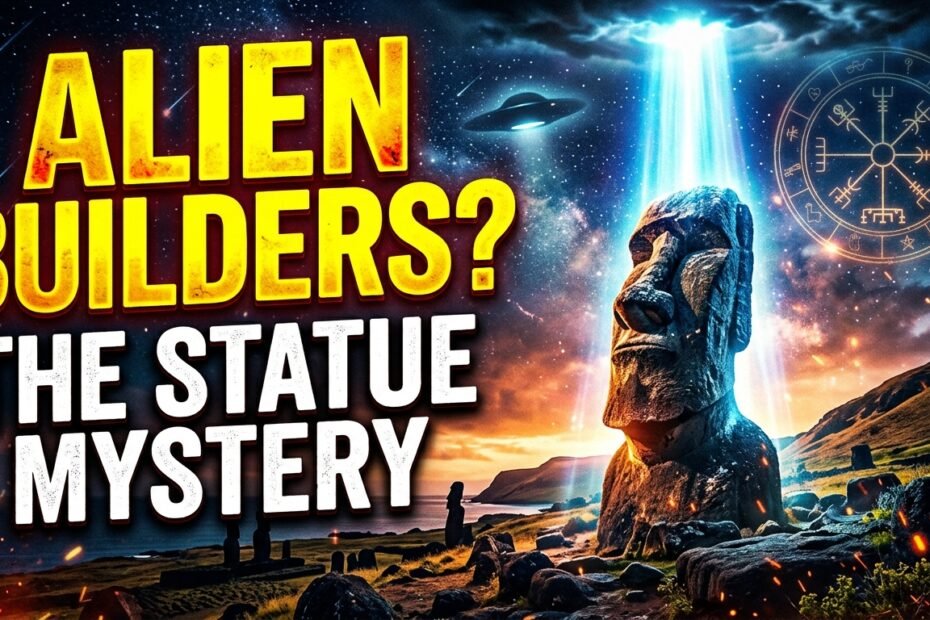
Thousands of miles from any continental landmass, lost in the vast expanse of the Pacific Ocean, lies Rapa Nui. A tiny, wind-swept speck of volcanic rock known to the world as Easter Island. But this isolated sanctuary holds one of history’s most profound enigmas: the Moai. Nearly a thousand colossal stone sentinels stand in silent vigil along the coastline, their deep-set eyes gazing eternally inland, watching over a civilization that vanished into the mists of time.
Who carved these monolithic giants, and more importantly, how did they move stones weighing up to eighty tons across treacherous terrain without wheels or draft animals? For centuries, explorers and archaeologists were stumped, grasping at wild theories of alien intervention or lost continents. The truth, buried beneath layers of sediment and myth, is far more compelling.
These are not just mere “heads.” Beneath the earth, massive bodies lay hidden, covered by centuries of soil. The Moai were carved primarily from the compressed volcanic ash of Rano Raraku, a crater that still bears the scars of an abrupt, frantic halt in production. Unfinished statues remain tethered to the bedrock, tools abandoned in the dust, as if the carvers were swallowed by the earth itself. The Rapa Nui people shaped these imposing figures using only basalt picks, an astonishing feat of sheer human will and devotion. They were aringa ora, the living faces of deified ancestors, erected on stone platforms called ahu to channel spiritual power, or mana, and protect their descendants.
The method of their transportation baffled engineers until local oral traditions finally unlocked the secret. The islanders had always claimed the statues “walked” to their destinations. Skeptics scoffed, but experimental archaeology vindicated the legends. By tying ropes around the head and coordinating teams to pull from side to side in a rhythmic, rocking motion, the Moai could indeed be “walked” upright across the island. The statues possessed a low center of gravity, engineered perfectly for this hypnotic journey from the quarry.
Yet, tragedy struck this remote paradise. When European ships first anchored off Rapa Nui in 1722, the mighty Moai still stood proud. But within a century, every single one had been toppled. Early narratives falsely painted a picture of “ecocide,” suggesting the Rapa Nui recklessly destroyed their environment to transport the stones, triggering famine and warfare. Modern science tells a darker, more tragic story. The true collapse was orchestrated by the arrival of outsiders—bringing foreign diseases, slave raids, and brutal exploitation that decimated the population.
Today, the Moai have been painstakingly restored, standing upright once more against the howling Pacific winds. They remain a testament not to a society that failed, but to the extraordinary ingenuity, resilience, and spiritual depth of the Rapa Nui. They are silent guardians of a history nearly erased, challenging us to listen to the stones before their stories are lost forever.
प्रशांत महासागर की असीम गहराइयों और लहरों के बीच, दुनिया की नज़रों से कोसों दूर बसा है रापा नुई, जिसे आज हम ईस्टर आइलैंड के नाम से जानते हैं। यह सिर्फ एक छोटा सा ज्वालामुखीय द्वीप नहीं है; यह एक ऐसा रहस्यमयी कैनवास है जिस पर सदियों पहले एक गुमनाम सभ्यता ने पत्थरों में अपनी अमर गाथा उकेरी थी। इसी वीरान ज़मीन के किनारों पर खड़े हैं मोआई—हज़ारों विशालकाय पाषाण मूर्तियां, जिनकी गहरी और मौन आंखें समंदर की तरफ नहीं, बल्कि अपनी ही ज़मीन की तरफ देखती हैं। ये मूर्तियां सिर्फ पत्थर के टुकड़े नहीं, बल्कि एक ऐसे अतीत के खामोश पहरेदार हैं जो समय की धुंध में कहीं खो गया।
आखिर इन विशालकाय आकृतियों को किसने गढ़ा? और सबसे बड़ा सवाल—पहिए या किसी जानवर की मदद के बिना, अस्सी टन तक वज़नी इन पत्थरों को मीलों दूर कैसे ले जाया गया? सदियों तक यह सवाल खोजकर्ताओं और वैज्ञानिकों को उलझाता रहा। कुछ ने इसे एलियंस का काम बताया, तो कुछ ने किसी लुप्त दुनिया का जादू। लेकिन सच्चाई, जो ज़मीन की परतों और लोककथाओं में दबी थी, इन सब से कहीं ज़्यादा रोमांचक है।
आमतौर पर लोग इन्हें केवल ‘ईस्टर आइलैंड के सिर’ समझते हैं, लेकिन ज़मीन के नीचे इन मूर्तियों के विशाल धड़ भी छिपे हुए हैं। इनका निर्माण रानो राराकु ज्वालामुखी की राख से बने पत्थरों से किया गया था। आज भी वह खदान ऐसी दिखती है मानो काम को अचानक बीच में ही रोक दिया गया हो। कई अधूरी मूर्तियां आज भी चट्टानों से जुड़ी हैं, और पत्थर तोड़ने वाले औज़ार वहीं बिखरे पड़े हैं, जैसे शिल्पकार किसी अज्ञात आपदा का शिकार हो गए हों। रापा नुई के लोगों ने केवल बेसाल्ट पत्थरों के औज़ारों से इन आकृतियों को तराशा था। ये उनके पूर्वजों के ‘जीवित चेहरे’ थे, जिन्हें ‘आहू’ नामक चबूतरों पर स्थापित किया जाता था ताकि वे अपने वंशजों की रक्षा कर सकें।
इन मूर्तियों को ढोने का तरीका लंबे समय तक एक पहेली बना रहा। स्थानीय लोगों की पुरानी कहानियां कहती थीं कि ये मूर्तियां “चलकर” अपनी जगह पर पहुंचीं। विज्ञान ने पहले इसका मज़ाक उड़ाया, लेकिन प्रयोगों ने साबित कर दिया कि लोककथाएं सच्ची थीं। रस्सियों के सहारे, एक लयबद्ध तरीके से मूर्तियों को झुलाते हुए सचमुच उन्हें सीधा खड़ा करके “चलाया” जा सकता था। मूर्तियों का गुरुत्वाकर्षण केंद्र इस तरह से तैयार किया गया था कि उन्हें आसानी से आगे बढ़ाया जा सके।
लेकिन इस रहस्यमयी स्वर्ग को नज़र लग गई। १७२२ में जब पहली बार यूरोपीय जहाज़ यहां पहुंचे, तब ये मूर्तियां शान से खड़ी थीं। लेकिन कुछ ही दशकों में सब कुछ बदल गया। सभी मूर्तियां ज़मीन पर गिरा दी गईं। पहले कहा गया कि द्वीपवासियों ने मूर्तियों के लिए सारे पेड़ काट डाले और खुद ही अपना विनाश कर लिया। लेकिन आधुनिक शोध एक अधिक क्रूर सत्य उजागर करते हैं। रापा नुई का पतन उनके अपने हाथों नहीं, बल्कि बाहर से आई बीमारियों, गुलामी और शोषण के कारण हुआ था जिसने इस पूरी सभ्यता को लगभग खत्म कर दिया।
आज, बहुत से मोआई को फिर से खड़ा कर दिया गया है। वे हवाओं से जूझते हुए फिर से अपने द्वीप की रखवाली कर रहे हैं। वे किसी हारी हुई सभ्यता के अवशेष नहीं, बल्कि मानवीय दृढ़ संकल्प और असीम श्रद्धा के प्रतीक हैं। वे हमें चुनौती देते हैं कि इससे पहले कि उनकी कहानियां हमेशा के लिए खो जाएं, हम इन खामोश पत्थरों की आवाज़ सुनें।
Pacific Ocean ke bilkul beech mein, duniya se bhot door ek chhota sa island hai jise hum Easter Island ya Rapa Nui kehte hain. Agar tumne kabhi internet pe wo giant stone heads dekhe hain, toh tum samajh jaoge main kiski baat kar raha hoon. In statues ko Moai kehte hain, aur trust me, inki story kisi thriller movie se kam nahi hai. Ek aisi jagah jahan na koi modern technology thi, na animals, wahan in logon ne 80-80 ton ke massive statues banaye aur unhe poore island pe move kiya. Kaise? Yehi toh sabse bada mystery hai!
Pehle toh logon ko lagta tha ki ye sirf bade-bade “heads” hain, lekin recent excavations se pata chala ki zameen ke neeche inke poore bodies buried hain. Inhe Rano Raraku naam ke ek volcanic crater ke pattharon se carve kiya gaya tha. Agar tum aaj bhi us jagah jaoge, toh tumhe lagega jaise kaam kal hi ruka ho. Wahan half-carved statues aur tools aise hi pade hain, jaise achanak sab kaam chhod kar kahin gayab ho gaye. Rapa Nui ke log in statues ko apne ancestors ka roop maante the. Unka belief tha ki ye statues unke kabeelay ko protect karte hain, isliye ye statues hamesha island ki taraf dekhte hain, samandar ki taraf nahi.
Ab aate hain sabse crazy part pe. Itne heavy statues ko unhone bina wheels ke miles door kaise move kiya? Jab early explorers ne locals se poocha, toh unhone simply kaha, “Statues khud chal kar gaye the.” Log haste the is baat pe, aliens aur magic ki theories banane lage. Lekin guess what? Locals sach bol rahe the! Archaeologists ne recently prove kiya ki agar tum statue ke aas-paas ropes baandh kar ek specific rhythm mein usko left-right rock karo, toh wo actually “walk” karta hai. In statues ka center of gravity aise design kiya gaya tha ki unhe easily tilt karke aage badhaya ja sake. Mind-blowing, right?
Lekhin is island ki story mein ek bhot sad twist bhi hai. 1722 mein jab Europeans pehli baar wahan aaye, tab ye saare Moai proudly khade the. Par within 100 years, har ek statue ko gira diya gaya tha. Purani theories bolti thin ki Rapa Nui ke logon ne apne hi trees kaat diye statues move karne ke liye aur apna khud ka eco-system destroy kar diya. Par ab nayi research batati hai ki asli villain koi aur tha. Bahar se aaye logon ne wahan aisi diseases failayi aur logon ko slaves bana kar le gaye, jisne is poori civilization ko lagbhag khatam kar diya.
Aaj wo Moai waapas se apni jagah khade kar diye gaye hain. Wo bas patthar ke tukde nahi hain; wo ek bhot hi resilient aur genius civilization ki aakhiri nishani hain. Jab bhi tum un pictures ko dekhoge, toh bas itna yaad rakhna ki human willpower kitni extreme ho sakti hai.