The Mystery of Roanoke Colony: The Riddle of America’s Lost Settlement
In August 1590, after three agonizing years of delay in England, Governor John White finally sailed back into the waters of Roanoke Island, off the coast of present-day North Carolina. He was eager to reunite with the 115 English colonists he had left behind—a group of pioneering men, women, and children that included his own daughter, Eleanor Dare, and his infant granddaughter, Virginia Dare.
Instead of being greeted by a thriving settlement, White stepped into an unsettling silence. The cottages had been neatly taken down, the perimeter fortified, but not a single living soul remained. Over a hundred men, women, and children had vanished without leaving behind a single grave, bone, or trace of violence.
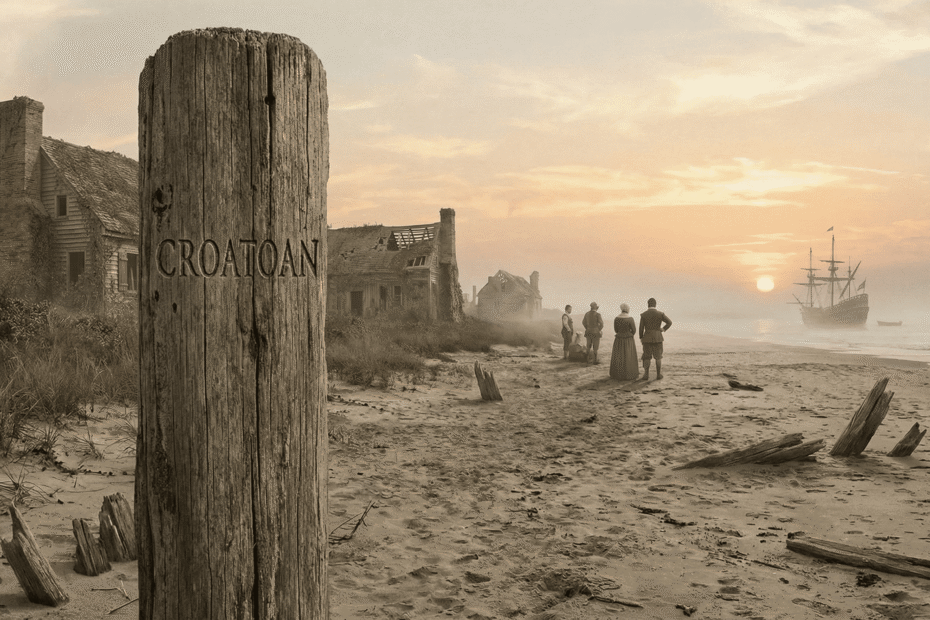
The only clues left in the desolate clearing were letters etched into wood: the letters “CRO” carved into a shoreline tree, and the full word “CROATOAN” gouged into a sturdy post near the fort’s entrance.
More than four centuries later, the fate of the “Lost Colony” remains one of the greatest founding mysteries in American history.
—
The Birth of Roanoke (1587)
In the late 16th century, Queen Elizabeth I granted Sir Walter Raleigh a royal charter to establish a permanent English foothold in the New World to challenge Spanish supremacy in the Americas.
In July 1587, a fresh expedition led by artist and mapmaker John White arrived at Roanoke Island. Unlike earlier military outposts, this group was intended to be a genuine civilian colony: 90 men, 17 women, and 9 children, who brought along farming tools, livestock, and dreams of building a permanent society.
Shortly after their arrival, history was made on August 18, 1587, when John White’s daughter Eleanor gave birth to Virginia Dare—the very first English child born on the North American continent.
However, the settlement faced immediate hardship. Arriving late in the planting season, relations with neighboring indigenous tribes were fraught with tension, and the colonists soon realized their provisions would not sustain them through the winter. The settlers persuaded Governor White to sail back to England in late August 1587 to secure urgent food, farming supplies, and reinforcements.
—
The Three-Year Delay
White arrived in England in late 1587 expecting to return within months. But geopolitical turmoil intervened. In 1588, King Philip II of Spain launched the massive Spanish Armada against England.
With the kingdom fighting for its very survival, Queen Elizabeth I placed an embargo on all English shipping, commandeering every seaworthy vessel for the royal defense. For three long years, White was stranded in England, powerless to rescue his family and colonists across the Atlantic.
—
The Ghost Settlement of 1590
It was not until August 1590 that White secured passage on a privateering voyage bound for the Caribbean and the Outer Banks. On August 18, 1590—his granddaughter Virginia’s third birthday—White landed on the shores of Roanoke Island.
What he discovered was utterly baffling:
– Systematic Departure: The settlement was completely deserted. The cottages had not been burned, pillaged, or destroyed; rather, they had been carefully dismantled, indicating that the settlers had taken their time and packed up their belongings.
– No Signs of Conflict: There were no skeletons, no freshly dug graves, no discarded weapons, and no signs of an ambush or siege.
– The Cryptic Carvings: At the tree line near the water, White spotted the letters “CRO” carved into trunk bark. At the entrance to the fortified palisade, the word “CROATOAN” was carved into a heavy wooden post.
– The Crucial Missing Symbol: Before departing in 1587, White had agreed on a secret code with the settlers: if forced to abandon the island due to distress or attack, they were to carve a Maltese Cross above their destination. There was no cross anywhere on the post or trees.
To White, the message was clear: the colonists had relocated peacefully to Croatoan Island (now Hatteras Island), situated roughly 50 miles south of Roanoke, which was home to the friendly Croatoan (Hatteras) tribe led by their allied chieftain, Manteo.
—
A Rescue Thwarted by the Elements
White was determined to sail immediately to Croatoan Island to locate his people. But nature was merciless.
A severe hurricane-season storm battered the fleet off the Outer Banks. Massive waves snapped anchor cables, drove the ships dangerously close to the treacherous shoals, and ruined their freshwater supplies. With provisions exhausted and the weather deteriorating rapidly, the ship’s captain refused to risk the fleet any further and ordered an immediate return to England.
John White never secured the financial backing or ships for another voyage. He spent his final years in Ireland, haunted by the mystery, and died without ever knowing the fate of his daughter and granddaughter.
—
Major Theories and Archaeological Discoveries
Over the centuries, historians, archaeologists, and forensic scientists have pieced together several compelling theories:
1. Assimilation with Local Indigenous Tribes
The most widely accepted historical theory is that facing acute famine, the settlers split into smaller groups and integrated into neighboring Native American communities.
– The Croatoan Connection: Settlers likely moved south to live among the friendly Croatoan tribe. In the 17th and 18th centuries, European explorers encountering the Hatteras and Lumbee tribes reported Native individuals with distinct European features—such as grey and blue eyes, lighter hair, and the ability to speak archaic forms of English. Furthermore, several traditional Native families carried English surnames identical to those on the 1587 Roanoke passenger manifest.
– Recent Excavations: The First Colony Foundation and archaeological teams at Cape Creek on Hatteras Island have unearthed late 16th-century English trade goods, including lead shot, gun parts, an Elizabethan gold signet ring, and 16th-century writing slate fragments mixed within Native American cultural layers.
2. The 800-Year Megadrought
In 1998, climate scientists from the University of Arkansas examined ancient bald cypress tree rings (dendrochronology) near the Roanoke River basin. The data revealed that the exact years of the Roanoke settlement (1587–1589) coincided with the most extreme three-year megadrought the region had experienced in over 800 years.
With local crops failing and freshwater severely depleted, survival on the island would have been nearly impossible without dispersing inland or integrating with native hunters.
3. The Secret Map Patch and “Site X”
In 2012, researchers at the British Museum conducted multi-spectral imaging on John White’s original 1585 watercolor map, *La Virginea Pars*. They discovered a hidden patch of paper covering a drawn symbol—a four-pointed star fortress located 50 miles inland, near the mouth of the Chowan and Roanoke Rivers.
Archaeological excavations at this inland location (dubbed “Site X” in Bertie County, North Carolina) uncovered fragments of Elizabethan Border Ware pottery, food preparation tools, and firearm hardware dating precisely to the late 16th century, suggesting a subset of colonists moved inland to establish a secure secondary outpost.
4. Other Scenarios: Powhatan Conflict and Spanish Raids
– When the Jamestown colony was founded in 1607, Captain John Smith heard unverified reports from Chief Powhatan that his warriors had wiped out an English settlement living alongside the Chesapeake tribe.
– Others suggested a Spanish naval raid, given the ongoing war, but historical archives in Seville reveal that Spanish search expeditions looking for Roanoke arrived years later and found the site already abandoned.
—
Conclusion: The Enduring Riddle
The mystery of Roanoke is not simply a tale of a vanished village; it is a foundational human story of survival, colonial ambition, environmental disaster, and cultural crossroads.
While historical and archaeological evidence increasingly points to a gradual assimilation with local Indigenous nations rather than a sudden catastrophe, the full and final story of those 115 souls remains etched into history just like the word on that wooden post: enigmatic, haunting, and forever remembered as America’s “Lost Colony.”
रोआनोक की खोई हुई बस्ती: 115 लोगों के रहस्यमयी गायब होने की अनसुलझी दास्तान
अगस्त 1590 में जब गवर्नर जॉन व्हाइट तीन साल के लंबे इंतज़ार के बाद इंग्लैंड से अमेरिका के रोआनोक द्वीप (Roanoke Island, आधुनिक नॉर्थ कैरोलिना) पर लौटे, तो उन्हें उम्मीद थी कि उनकी बस्ती फल-फूल रही होगी। वहां उनकी बेटी एलिनोर डेयर और नन्हीं पोती वर्जीनिया डेयर समेत 115 अंग्रेज़ नागरिक बस रहे थे।
लेकिन किनारे पर कदम रखते ही जॉन व्हाइट का सामना एक सन्नाटे से हुआ। वहां न कोई इंसान था, न कोई आवाज़। 115 से अधिक पुरुष, महिलाएं और बच्चे बिना किसी खून-खराबे, कब्र या लड़ाई के निशान छोड़े रहस्यमयी ढंग से गायब हो चुके थे।
उस वीरान जगह पर अगर कुछ बचा था, तो वो थे लकड़ी पर उकेरे गए चंद रहस्यमयी अक्षर—एक पेड़ पर खुदा हुआ शब्द “CRO” और किले के मुख्य द्वार के लकड़ी के खंभे पर खुदा हुआ रहस्यमयी शब्द “CROATOAN”।
चार शताब्दियों से अधिक समय बीत जाने के बाद भी ‘द लॉस्ट कॉलोनी’ (The Lost Colony) का यह रहस्य इतिहास की सबसे बड़ी अनसुलझी पहेलियों में से एक बना हुआ है।
—
रोआनोक बस्ती की स्थापना (1587)
16वीं सदी के अंत में, इंग्लैंड की महारानी एलिज़ाबेथ प्रथम ने सर वॉल्टर रैले को नई दुनिया (अमेरिका) में एक स्थायी अंग्रेज़ी उपनिवेश स्थापित करने की अनुमति दी, ताकि अटलांटिक पर स्पेन के प्रभुत्व को चुनौती दी जा सके।
जुलाई 1587 में जॉन व्हाइट के नेतृत्व में 115 लोगों का एक दल रोआनोक द्वीप पहुंचा। इसमें 90 पुरुष, 17 महिलाएं और 9 बच्चे शामिल थे। यह केवल सैनिकों की कोई चौकी नहीं थी, बल्कि एक पूरी सिविलियन बस्ती थी, जिसका मकसद खेती करना और वहां हमेशा के लिए बसना था।
वहां पहुंचने के कुछ ही हफ्तों बाद, 18 अगस्त 1587 को जॉन व्हाइट की बेटी एलिनोर ने एक बच्ची को जन्म दिया, जिसका नाम ‘वर्जीनिया डेयर’ (Virginia Dare) रखा गया। वह अमेरिकी महाद्वीप पर पैदा होने वाली पहली अंग्रेज़ संतान थी।
लेकिन जल्द ही मुश्किलें शुरू हो गईं। फसल का मौसम बीत चुका था, स्थानीय मूल जनजातियों (Native Americans) के साथ संबंध तनावपूर्ण थे, और भोजन व ज़रूरी रसद की भारी कमी हो गई। बसने वालों ने गवर्नर जॉन व्हाइट से अनुरोध किया कि वे फौरन इंग्लैंड जाकर नई रसद, दवाएं और मदद लेकर आएं। जॉन व्हाइट कुछ ही महीनों में लौटने का वादा करके अगस्त 1587 के अंत में इंग्लैंड रवाना हो गए।
—
तीन साल की मजबूरी और स्पैनिश युद्ध
जॉन व्हाइट 1587 के अंत में इंग्लैंड पहुंचे, लेकिन हालात ने अचानक भयानक मोड़ ले लिया। 1588 में स्पेन के राजा फिलिप द्वितीय ने इंग्लैंड पर हमला करने के लिए एक विशाल नौसैनिक बेड़ा ‘स्पैनिश अरमाडा’ (Spanish Armada) भेज दिया।
इंग्लैंड अपने अस्तित्व की लड़ाई लड़ रहा था। महारानी एलिज़ाबेथ प्रथम ने देश के सभी जहाजों को युद्ध के लिए सुरक्षित रखने का शाही आदेश जारी कर दिया। किसी भी नागरिक जहाज को अटलांटिक पार जाने की अनुमति नहीं थी। इस युद्ध और नौसैनिक पाबंदियों के कारण जॉन व्हाइट पूरे तीन साल तक इंग्लैंड में बेबस फंसे रहे।
—
1590 की वापसी: एक वीरान भूतिया बस्ती
अगस्त 1590 में जॉन व्हाइट को आखिरकार एक प्राइवेटियर जहाज से रोआनोक लौटने का मौका मिला। 18 अगस्त 1590 को—अपनी पोती वर्जीनिया के ठीक तीसरे जन्मदिन पर—व्हाइट रोआनोक द्वीप के तट पर पहुंचे।
वहां जो नज़ारा था, उसने सभी के रोंगटे खड़े कर दिए:
– व्यवस्थित प्रस्थान: पूरी बस्ती खाली पड़ी थी। घरों को जलाया या लूटा नहीं गया था, बल्कि उन्हें बड़ी सावधानी से खोला (dismantle) गया था, जिससे साफ था कि लोग किसी भगदड़ में नहीं भागे थे, बल्कि योजना बनाकर सारा सामान लेकर गए थे।
– हिंसा का कोई नामोनिशान नहीं: वहां न तो कोई कंकाल मिला, न कोई ताज़ा कब्र, और न ही हथियारों या संघर्ष का कोई निशान था।
– रहस्यमयी नक्काशी: जंगल के किनारे एक पेड़ की छाल पर “CRO” खुदा मिला, और बस्ती के लकड़ी के सुरक्षा खंभे पर बड़े-बड़े अक्षरों में “CROATOAN” लिखा हुआ था।
– खतरे का गायब निशान (Maltese Cross): इंग्लैंड से निकलते वक्त व्हाइट ने बस्ती वालों के साथ एक गुप्त कोड तय किया था—अगर उन पर कोई हमला होता है या उन्हें संकट में भागना पड़ता है, तो वे अपने गंतव्य के नाम के ऊपर एक ‘क्रॉस’ (+ का चिन्ह) बनाएंगे। वहां कहीं भी कोई क्रॉस नहीं बना था।
इसका सीधा सा मतलब था कि बस्ती के लोग अपनी मर्ज़ी से सुरक्षित रूप से लगभग 50 मील दक्षिण में स्थित क्रोएटोन द्वीप (Croatoan Island, आधुनिक हैटरस द्वीप) चले गए थे, जहां उनकी मित्र क्रोएटोन जनजाति और उनके प्रमुख मांटेओ (Manteo) रहते थे।
—
तूफ़ान और अधूरी खोज
जॉन व्हाइट तुरंत क्रोएटोन द्वीप जाकर अपने परिवार और लोगों को ढूंढना चाहते थे। लेकिन कुदरत को कुछ और ही मंज़ूर था।
अटलांटिक महासागर में भीषण समुद्री तूफ़ान आ गया। ऊंची लहरों ने जहाजों के लंगर (anchors) तोड़ दिए, पीने का साफ पानी खत्म हो गया और जहाज उथले पानी में डूबने की कगार पर पहुंच गए। जहाज के कैप्टन ने और जोखिम लेने से साफ़ इनकार कर दिया और जहाज को वापस इंग्लैंड की तरफ मोड़ दिया।
जॉन व्हाइट दोबारा कभी धन या जहाज जुटाकर अमेरिका नहीं लौट पाए। उन्होंने अपने अंतिम दिन आयरलैंड में बिताए और अपनी बेटी व पोती के रहस्य से तड़पते हुए ही इस दुनिया से विदा हो गए।
—
प्रमुख सिद्धांत और पुरातात्विक खोजें
सदियों से इतिहासकारों और पुरातत्वविदों ने इस रहस्य को सुलझाने के लिए कई महत्वपूर्ण सिद्धांत और सबूत जुटाए हैं:
1. स्थानीय मूल जनजातियों में विलय (Assimilation Theory)
इतिहासकारों का सबसे मजबूत मानना है कि भीषण अकाल का सामना करते हुए ये लोग छोटी-छोटी टोलियों में बंटकर मित्रवत मूल अमेरिकी जनजातियों (Croatoan/Hatteras) के साथ रहने लगे।
– मिश्रित पहचान: 17वीं और 18वीं सदी में जब अंग्रेज़ यात्री इस इलाके में पहुंचे, तो उन्हें हैटरस और लुम्बी जनजातियों में ऐसे स्थानीय लोग मिले जिनकी आंखें नीली या भूरी थीं, बाल हल्के थे, और वे अंग्रेज़ी के पुराने शब्द बोलते थे। कई स्थानीय परिवारों के उपनाम (Surnames) भी 1587 के रोआनोक यात्रियों की सूची से हूबहू मिलते थे।
– पुरातात्विक खोजें: हैटरस द्वीप पर हाल की खुदाई में 16वीं सदी के ब्रिटिश सामान—जैसे बंदूक के पुर्जे, सीसे की गोलियां, एलिज़ाबेथन सोने की अंगूठी (Signet Ring), और लिखने की स्लेट के टुकड़े मिले हैं।
2. 800 वर्षों का सबसे भीषण सूखा (The Megadrought)
1998 में अर्कांसस विश्वविद्यालय के वैज्ञानिकों ने रोआनोक नदी के आसपास के प्राचीन पेड़ों के छल्लों (Tree Rings) का वैज्ञानिक अध्ययन किया। नतीजों से साबित हुआ कि 1587 से 1589 के बीच यह पूरा इलाका पिछले 800 वर्षों के सबसे भयंकर सूखे की चपेट में था।
पीने के पानी और फसलों की भारी तबाही के कारण किसी भी बस्ती के लिए द्वीप पर टिके रहना असंभव था, जिसके चलते लोगों का मुख्य भूमि की तरफ पलायन करना ही एकमात्र रास्ता बचा था।
3. सीक्रेट मैप और ‘साइट X’ (Site X) की खोज
2012 में ब्रिटिश म्यूज़ियम ने जॉन व्हाइट द्वारा 1585 में बनाए गए एक पुराने नक्शे (*La Virginea Pars*) की मल्टी-स्पेक्ट्रल इमेजिंग की। जांच में सामने आया कि नक्शे पर लगे एक कागज़ के टुकड़े के नीचे गुप्त रूप से एक चार कोनों वाले किले का निशान छुपाया गया था, जो मुख्य भूमि पर 50 मील अंदर एलबेमार्ले साउंड के पास स्थित था।
जब पुरातत्वविदों ने उस जगह (Site X) पर खुदाई की, तो वहां 16वीं सदी के ब्रिटिश मिट्टी के बर्तन (Border Ware pottery) और औज़ार मिले, जिससे संकेत मिलता है कि रोआनोक के कुछ लोग अंदरूनी सुरक्षित इलाके में जाकर बस गए थे।
4. अन्य संभावनाएं
– 1607 में जेम्सटाउन बस्ती बसने पर कैप्टन जॉन स्मिथ को स्थानीय राजा पोहटन (Powhatan) से पता चला था कि उनके कबीले ने चेसापीक खाड़ी के पास अंग्रेज़ों के एक समूह को मार दिया था, हालांकि इसका कोई पुख्ता सबूत नहीं मिला।
– कुछ का मानना था कि कुछ लोग छोटी नावों में समंदर के रास्ते इंग्लैंड लौटने की कोशिश में डूब गए।
—
निष्कर्ष
रोआनोक का रहस्य केवल एक गायब हो चुकी बस्ती की दास्तान नहीं है, बल्कि यह इंसानी अस्तित्व, संघर्ष और दो अलग-अलग संस्कृतियों के मिलन की एक अमर ऐतिहासिक गाथा है।
तमाम ऐतिहासिक और वैज्ञानिक साक्ष्य यही इशारा करते हैं कि वे 115 लोग किसी हमले में खत्म नहीं हुए, बल्कि उन्होंने जिंदा रहने के लिए इस नई दुनिया के मूल निवासियों को अपना लिया। आज भी लकड़ी के उस खंभे पर खुदा शब्द “CROATOAN” इतिहास की सबसे रोमांचक और रहस्यमयी गवाहियों में गिना जाता है।
The Mystery of Roanoke Colony: 115 Logon Ka Achanak Gayab Hona Aur ‘CROATOAN’ Ka Raaz
August 1590 ki baat hai. Teen lambe saal tak England mein phanse rehne ke baad Governor John White jab America ke Roanoke Island par wapas pahuche, toh unhe laga tha ki unki banayi basti aabaad hogi. Wahan unki beti Eleanor aur unki nanhi poti Virginia Dare samet 115 English settlers reh rahe the.
Lekin jab wo kinare par utre, toh unka swagat kisi shor-sharabe ya chehron ne nahi, balki ek bhootia khamoshi ne kiya. Puri ki puri colony sunsan thi. Na koi insan dikha, na koi aawaz aayi. 115 se zyada mard, auratein aur bachche aise gayab ho chuke the jaise unka koi wajood hi na raha ho.
Wahan na koi laash mili, na koi taaza qabr, aur na hi ladai ya aagzane ke koi nishan the. Bas do ajeeb se clues chhode gaye the: paas ke ek ped par khuda hua word “CRO” aur fort ke lakdi ke khambhe par bada-bada likha hua ek mysterious word—”CROATOAN”.
Aaj 400 saal se zyada waqt beet chuka hai, lekin America ki ye pehli permanent settlement aakhir kahan chali gayi, ye mystery aaj bhi historians aur researchers ke dimaag ko uljha deti hai.
—
Roanoke Colony Ki Shuruaat (1587)
16th century ke aakhiri saalon mein England ki Queen Elizabeth I ne Sir Walter Raleigh ko permission di ki wo America mein pehli permanent English colony banayein, taaki Spain ke badhte dabdabe ko takkar di ja sake.
July 1587 mein artist aur mapmaker John White ke leadership mein 115 log Roanoke Island (North Carolina ke paas) pahuche. Is group mein 90 mard, 17 auratein aur 9 bachche shamil the. Ye koi fauji mission nahi tha, balki aam parivar the jo kheti-baadi karke nayi zameen par ek nayi duniya basana chahte the.
Wahan pahunchne ke thode hi din baad, 18 August 1587 ko John White ki beti Eleanor ne ek bachchi ko janam diya, jiska naam rakha gaya Virginia Dare. Wo American continent par paida hone wali pehli English baby thi.
Lekin jald hi mushkilein khadi ho gayi. Kheti ka season nikal chuka tha, local Native American tribes ke sath rishte kafi tanaav-bhare ho gaye the, aur khane-peene ka ration khatam hone laga. Basti ke logon ne Governor John White par dabaav banaya ki wo turant England wapas jayein aur zaroori supplies, medicines aur madad lekar aayein. White ne wada kiya ki wo kuch hi mahino mein wapas laut aayenge, aur August 1587 ke aakhiri hafte mein wo England ke liye rawana ho gaye.
—
England Mein 3 Saal Ki Majboori
White jab England pahuche, toh unhe andaza nahi tha ki unka ye safar teen saal tak atka rahega. 1588 mein Spain ke King Philip II ne England par hamla karne ke liye apni vishal naval fleet ‘Spanish Armada’ bhej di.
England ke upar astitva ka sankat mandra raha tha. Queen Elizabeth I ne desh ke har ek samundari jahaz ko fauji safety ke liye freeze kar diya. Kisi bhi civilian jahaz ko Atlantic Ocean cross karne ki ijazat nahi thi. Is vajah se John White chahte hue bhi 3 lambe saal tak England mein bebas baithe rahe.
—
1590 Ka Khaufnak Manzar: Khaali Basti Aur ‘CROATOAN’ Ka Raaz
August 1590 mein John White ko aakhirkar ek privateer ship ke zariye Roanoke wapas aane ka rasta mila. 18 August 1590 ko—theek unki poti Virginia ke 3rd birthday par—White Roanoke ke kinare utre.
Lekin wahan jo manzar unhone dekha, usne unke hosh uda diye:
– Gharon Ko Dismantle Kiya Gaya Tha: Basti bilkul khaali thi. Gharon ko aag nahi lagayi gayi thi aur na hi tod-fod hui thi, balki unhe bohot aaram se khola gaya tha. Iska matlab tha ki log bhagdad mein nahi bhage the, balki unhone apna saara saman pack karke shift kiya tha.
– Khoon-Kharabe Ka Koi Saboot Nahi: Poore area mein koi dead body nahi mili, koi grave nahi thi, aur na hi koi weapons ya ladai ke nishan the.
– Mysterious Carvings: Samandar ke kinare ek ped ki chhaal par “CRO” khuda hua tha, aur fortified area ke main wooden post par bada-bada likha tha “CROATOAN”.
– Danger Code (Maltese Cross) Gayab Tha: England chhodte waqt White ne settlers ke sath ek secret rule tai kiya tha—agar unpar koi achanak attack hota hai ya unhe darr ki wajah se bhagna padta hai, toh wo jagah ke naam ke upar ek cross (+) ka nishan banayenge. Wahan post par koi cross nahi bana tha.
Iska seedha matlab tha ki basti ke log bina kisi ladai ke, apni marzi se safe hokar lagbhag 50 miles door ‘Croatoan Island’ (aaj ka Hatteras Island) chale gaye the, jahan unki dost Native tribe aur unke chief Manteo rehte the.
—
Samundari Toofan Aur Adhoori Khoj
John White turant Croatoan Island jakar apne parivar aur logon ko dhoondhna chahte the. Lekin kismat ko kuch aur hi manzoor tha.
Atlantic Ocean mein achanak bhayankar hurricane aur toofan aa gaya. Unchi lehron ne jahaz ke anchor cables tod diye, peene ka paani samandar mein beh gaya aur ships ke doobne ka khatra paida ho gaya. Ship ke captain ne aur aage badhne se saaf inkar kar diya aur jahaz ko majbooran England wapas modna pada.
John White iske baad dobara kabhi America ke liye ships nahi arrange kar paye. Unhone apni baaki zindagi Ireland mein akele bitayi aur apni beti aur poti ke gam mein hi unki death ho gayi.
—
Major Theories Aur Modern Archaeological Saboot
Sadiyon se historians aur scientists is mystery par research kar rahe hain aur kai hairan kar dene wale theories samne aayi hain:
1. Native American Tribes Ke Sath Mix Hona (Assimilation Theory)
Sabse solid aur logical theory ye hai ki bhookhmari aur resources ki kami ke chalte Roanoke ke log chhoti-chhoti teams mein bant kar local indigenous tribes (Croatoan/Hatteras) ke sath ghul-mil gaye.
– Blue Eyes Aur English Words: 17th aur 18th century mein jab English travelers is area mein pahuche, toh unhe local Hatteras aur Lumbee tribes ke logon mein European features mile—jaise blue/grey eyes, light brown hair, aur wo purane English words bolte the. Yahan tak ki kai Native parivaron ke surnames bhi 1587 ke Roanoke passenger list se match karte the.
– Zameen Se Mile Saboot: Hatteras Island par modern excavations ke dauran 16th century ke English artifacts mile hain—jaise lead bullets, gun parts, ek Elizabethan gold ring aur writing slates, jo Native American utensils ke sath dafan the.
2. 800 Saal Ka Sabse Bada Sookha (The Megadrought)
1998 mein University of Arkansas ke scientists ne purane pedon ke chhallon (tree rings / dendrochronology) ki scientific study ki. Data se saaf pata chala ki 1587 se 1589 ke beech North Carolina ke us area mein pichhle 800 saalon ka sabse bhayanak drought (sookha) pada tha.
Faslein barbaad ho gayi thi aur peene ka paani khatam ho gaya tha. Is haalat mein island par zinda rehna impossible tha, isliye settlers ko andar ke jungle ya native tribes ke paas jana hi pada.
3. Secret Map Aur ‘Site X’ Ka Khulasa
2012 mein British Museum ne John White ke banaye 1585 ke ek purane map (*La Virginea Pars*) ko advance multi-spectral scanning se scan kiya. Map par chhipaye gaye ek paper patch ke neeche ek 4-pointed star fort ka symbol mila, jo main land par 50 miles andar bana hua tha.
Archaeologists ne jab us jagah (jise “Site X” naam diya gaya) par excavation ki, toh wahan 16th century ki Elizabethan Border Ware pottery aur tools mile. Isse ye theory pakki hoti hai ki Roanoke ke kuch settlers inland shift hokar wahan bas gaye the.
4. Dusri Possibilities
– 1607 mein Jamestown settlement basne ke baad Captain John Smith ko Chief Powhatan ne bataya tha ki unke kabile ne Chesapeake ke paas ek English group ko mara tha, lekin iska koi physical proof nahi mila.
– Kuch logon ka manna hai ki kuch settlers chhoti naav (pinnace) lekar samandar ke raste wapas lautne ki koshish mein beh gaye.
—
Aakhiri Sach
Roanoke Colony ka gayab hona sirf ek horror story nahi hai, balki ye mushkil halat mein insani survival aur do alag cultures ke milan ki ek bemisaal dastaan hai.
Saare historical aur archaeological saboot yahi ishara karte hain ki 115 log kisi achanak aafat mein khatam nahi hue, balki unhone zinda rehne ke liye is nayi zameen ke logon ko apna liya aur unhi ke beech kho gaye. Aaj bhi us lakdi ke post par khuda hua word “CROATOAN” history ki sabse badi aur khoobsurat paheliyo mein shumar hai.